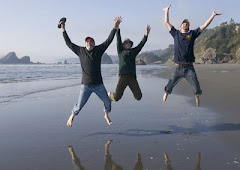
Whenever I’m in an upscale community (not a common occurrence), walking around looking at million dollar houses, I find myself asking, “Who are these people and where does all this money come from?” Right now I’m in Del Mar, California, in a house loaned to me by some homies from New Mexico who inherited it from their family. But who are all these other people, in their glass houses with ocean views, manicured landscapes, and shiny BMWs (I swear to God I haven’t seen one dirty car since I’ve been here)?
Who I actually see are the workers: gardeners, plumbers, plasterers, painters, general contractors, and dog walkers, busily keeping all this luxury afloat. The gardeners are all Mexicanos, pruning, planting, and watering all the lush vegetation that has turned these once barren hills (that’s when the homies’ family bought in) into paradise. In the mornings, as I walk along the windy streets in a circuitous path to the ocean I see some Anglo runners and dog walkers, most of them my age or older. Is this a community of retirees who bought in before the property taxes skyrocketed and who now benefit from Prop 13? Are they second home owners, so wealthy they can afford to hire all these people to maintain their houses for their two or three months’ winter stay?
Whoever they are, and whether their money is old money or nouveau riche money, I feel like an alien. Not only am I an alien in Del Mar particularly, but in California generally. Take today for example. I needed to put gas in my hosts’ car after driving it down the coast the other day to grocery shop. So I find out where the nearest gas station is and proceed apace. I make sure I know which side of the car the gas tank is on, and whether it has to be popped open from a release inside, and then I venture out. I pull into the gas station and there are all these instructions on the pumps about using your debit card or cash, which I intend to use instead of my credit card, but I’m already envisioning putting the money into the slot and seeing it disappear forever while I try to figure out how it actually connects to gas for the car. Fortunately, it also says I can pay inside, which I do. Then I go back to the car and pull the Regular Unleaded hose out and attempt to put it into my gas tank. But it has this weird accordion end on it, and try as I might I can’t get it to stay in the gas tank opening. Whenever I depress the delivery handle it just pops back up. I’m looking around in a panic thinking, maybe I’m trying to put the wrong gas in the tank because the pump says EC Regular Unleaded, whatever that is, but I see that all the pumps say that. So then I start looking around for someone to help me, embarrassing as that’s going to be, but remembering that I’ll never have to see this person again. But everyone who is working a pump is also working a cell phone and can’t hear me. Finally, I see a Mexicano worker put his phone away and I approach: “Habla Ingles?” I ask, and he answers, “ Poquito,” and I know I’m not going to be able to explain my predicament in Spanish. So then I find another guy, an Anglo this time, and I say, “I’m from New Mexico and I’ve never seen a pump hose like this and I can’t make it work in my gas tank.” Now I know I’m perpetuating a stereotype about New Mexicans, who already have enough trouble convincing everyone that we’re actually part of the U.S., but I’m desperate here. So he graciously comes over and shows me that you have to shove the hose into the tank until it locks and then dispense your gas. I keep apologizing and he keeps saying don’t worry about it but by then I’m completely frazzled and when I get back into my (their) car I pull out into the wrong lane and am forced onto I-5 going south when all I wanted to do was go to a gas station and fill the gas tank. I’m a perfectly competent driver under normal circumstances but now I’m a wailing banshee praying that there is am exit before San Diego where I can get off and find my way home without using up all the gas I just put back into the tank. And there is: Del Mar Heights, which brings me back to Camino Del Mar and the familiar streets leading up to the lovely bungalow that has been so graciously loaned to me by my New Mexico homies. As I’ve said before, maybe it’s best that I don’t leave home.
Saturday, April 16, 2011

Friday, April 8, 2011
Diary of a Bad Year, continued
Marriage, or a long-term partnership, is in part a power relationship (see Marriage post), and ours was emblematic of how that power shifts and flows through the many years of individual and relational change. For some crazy reason—part masochism, part curiosity, I guess—I started reading a book by Rafael Yglesias called A Happy Marriage that was a fictionalized account of his wife’s cancer death. I’d read Yglesias many years before, and I must have seen it on the new bookshelf at the public library, but what possessed me to pick it up at that stunningly complex moment I don’t know. Once I started, however, I couldn’t put it down, and while I faced the latest manifestation of Mark and my relational shift I became intimately involved in the details of Yglesias’ topsy-turvey marriage and their descent into cancer hell.
Although we arrived there along different paths, Yglesias’s marriage and my partnership had settled into a less confrontational pattern, where jockeying for power had receded in the face of a need for peace and calmness between us as we came to terms with diminishing returns in the rest of our lives: less intensity in our political work, less need to prove ourselves artistically, and less parenting as our kids were fledged. We, like they, looked forward to some time to do things we hadn’t done in awhile, like work on projects for our own enjoyment, visit our friends more, see some places we had never seen (albeit for us on a marginal income). But then we entered our separate reality, which manifest in both spacial and temporal terms.
As Mark’s illness progressed, the past, present, and future took on entirely new meaning. He couldn’t look forward to anything (no becoming in Nietzchean terms). To look back was an exercise in too much painful nostalgia. So his life became the present, which meant a focused attention to the details of his health/illness with little room left over for attention to much else. He had to center every fiber of his being on his being. I began to lose him incrementally as the intimacy of our relationship, in which we shared a common history and a current engagement, began to recede. While he was very solicitous about my health and the burdens placed upon me due to his illness, he really had little interest in anything that didn’t relate to being in his illness.
Everything we did, and everything we took into consideration, revolved around what was possible for Mark. He didn’t want to see anyone but family and a few close friends. I had to diplomatically erect barriers between him and everyone else who wanted to see him or help me or at least demonstrate their concern. To minimize direct contact but maintain some connection I set up a list-serve where I periodically posted e-mails letting folks know how Mark was doing, being careful to supply just the bare facts about the latest results of a CT scan, another trip to the hospital, or the onset of diabetes (once his pancreas was compromised he couldn’t produce insulin): a supply of information that didn’t invade a privacy that was never explicitly outlined to me but that I implicitly understood. What he thought and felt and experienced with me and the kids was not for public consumption. I had to restrain a friend from setting up a Caring Bridge web site for Mark, something definitely not in sync with who we were and how we wanted to be in the world. I’d seen too many sites that elicited too much tortured comment that perhaps filled the needs of those doing the commenting but would certainly not fill ours.
A couple of weeks before Mark died I sent this e-mail to the list-serve, apologizing for the long time between postings: “I find it’s increasingly difficult to write these updates. It’s almost as if Mark and I are in a separate reality (I use the term ‘reality’ in all its subjectivity, although as a pragmatist I have to assign some meaning to it). Illness, and cancer in particular, does this to people’s lives. Although I am by profession a writer, I haven’t really wanted to write about what it’s like to face Mark’s terminal diagnosis or the day to day details of his decline, partly because it’s already been dealt with by so many other writers and partly to protect Mark’s privacy.” Now, four months later, I am writing, but I hope that what I deem is “for public consumption” means something to my readers and respects the dignity of Mark’s life and death.
Although we arrived there along different paths, Yglesias’s marriage and my partnership had settled into a less confrontational pattern, where jockeying for power had receded in the face of a need for peace and calmness between us as we came to terms with diminishing returns in the rest of our lives: less intensity in our political work, less need to prove ourselves artistically, and less parenting as our kids were fledged. We, like they, looked forward to some time to do things we hadn’t done in awhile, like work on projects for our own enjoyment, visit our friends more, see some places we had never seen (albeit for us on a marginal income). But then we entered our separate reality, which manifest in both spacial and temporal terms.
As Mark’s illness progressed, the past, present, and future took on entirely new meaning. He couldn’t look forward to anything (no becoming in Nietzchean terms). To look back was an exercise in too much painful nostalgia. So his life became the present, which meant a focused attention to the details of his health/illness with little room left over for attention to much else. He had to center every fiber of his being on his being. I began to lose him incrementally as the intimacy of our relationship, in which we shared a common history and a current engagement, began to recede. While he was very solicitous about my health and the burdens placed upon me due to his illness, he really had little interest in anything that didn’t relate to being in his illness.
Everything we did, and everything we took into consideration, revolved around what was possible for Mark. He didn’t want to see anyone but family and a few close friends. I had to diplomatically erect barriers between him and everyone else who wanted to see him or help me or at least demonstrate their concern. To minimize direct contact but maintain some connection I set up a list-serve where I periodically posted e-mails letting folks know how Mark was doing, being careful to supply just the bare facts about the latest results of a CT scan, another trip to the hospital, or the onset of diabetes (once his pancreas was compromised he couldn’t produce insulin): a supply of information that didn’t invade a privacy that was never explicitly outlined to me but that I implicitly understood. What he thought and felt and experienced with me and the kids was not for public consumption. I had to restrain a friend from setting up a Caring Bridge web site for Mark, something definitely not in sync with who we were and how we wanted to be in the world. I’d seen too many sites that elicited too much tortured comment that perhaps filled the needs of those doing the commenting but would certainly not fill ours.
A couple of weeks before Mark died I sent this e-mail to the list-serve, apologizing for the long time between postings: “I find it’s increasingly difficult to write these updates. It’s almost as if Mark and I are in a separate reality (I use the term ‘reality’ in all its subjectivity, although as a pragmatist I have to assign some meaning to it). Illness, and cancer in particular, does this to people’s lives. Although I am by profession a writer, I haven’t really wanted to write about what it’s like to face Mark’s terminal diagnosis or the day to day details of his decline, partly because it’s already been dealt with by so many other writers and partly to protect Mark’s privacy.” Now, four months later, I am writing, but I hope that what I deem is “for public consumption” means something to my readers and respects the dignity of Mark’s life and death.
Sunday, March 20, 2011
Diary of a Bad Year, continued
Once Mark was admitted to the hospital, via the emergency room, when he could no longer keep any food down, they biopsied the tumor, which was malignant. It was, as we had previously been told, at the head of his pancreas and therefore nonresectable, or inoperable. The surgical oncologist came into Mark’s hospital room to tell us—the kids and I were there—while a drug addict in the next bed kept moaning for medication and turning up the TV to unbearable levels. He glared and muttered at me when I turned it down every time I passed by. Once the surgeon left after giving us the bad news they moved Mark to a private room. I remember going back to Jakob and Casey’s house about ten that night and collapsing on the bed in the guest room, sobbing, while the kids sat there helplessly with me.
It took nine days in the hospital to get a stent put in his duodenum with an endoscope so he could eat (it took two tries). Everyone there was incredibly kind. We made friends with all the nurses, the aids, the interns, the housekeepers, etc. and heard all their stories: how many kids they had; what school they were attending to improve their situation; where they were born and raised; how they liked (or hated) their job. You don’t have time to make friends with the doctors; you only see them when they have news to deliver (I never did see the gastroenterologist who put the stent in).
Chemotherapy was scheduled once we could get our insurance company’s approval. Mark was initially given dispensation for treatment at the UNM Cancer Center instead of Presbyterian Hospital, which was his medical insurer, because of the specialized surgical team at the Cancer Center. Once it was clear that surgery wasn’t an option, we had to again get approval through Presbyterian for oncology treatment. That took about a week, and I was grateful for the time. Mark was able to eat, albeit a restricted diet (no fresh vegetables, chewy meat, or anything that could conceivably get stuck in the stent), and gain a little strength before starting once a week chemo treatments.
We’ve all heard the horror stories about chemotherapy (and seen them, if you follow the HBO series Breaking Bad, ironically filmed in Albuquerque): losing weight, losing hair, throwing up, spiraling down. Mark’s physical well being improved, however: he gained some weight, never lost any hair (he didn’t have much to begin with but what he had stayed on his head), never threw up, and maintained the energy to go for a daily walk. After a few months of weekly chemo, if he felt well enough, he even drove himself down to Albuquerque for his session, spending the night at Jakob and Casey’s or even driving himself back the same day. Max had made the decision to take a leave of absence from college, and stayed in Albuquerque, so he was there with Mark when I wasn’t.
Every six weeks we both went down for a CT scan to monitor the size of the tumor and see the oncologist for an evaluation. (By the way, all those TV shows and movies where they show cancer patients going into the oncologist’s office for a consultation are a complete fabrication. Those docs run from exam room to exam room and barely have more than 15 minutes for a look at the lab work, a quick physical check-up, and to answer a few questions we manage to squeeze in. Then it’s off to the races.) We tried to make it festive, and had dinner with the kids, watched movies, and spent many hours in front of the fireplace on cold, winter nights.
Amazingly, Mark was also able to pay considerable attention to his intellectual work. For many months during his illness he edited and serialized in our non-profit community newspaper La Jicarita News an article he had written concerning the adjudication of land grants in New Mexico. The article was intended to be the introduction to a book dealing with this sordid period in New Mexico’s history, where indigenous people were dispossessed of millions of acres of land that had been granted them by the Spanish and Mexican governments. Titled “Brief History of American Imperialism” it chronicled early American expansionism, Manifest Destiny, the Mexican-American War, the Treaty of Guadalupe Hidalgo, and racism in the New Mexico Territory.
Not only that, but he spent two or three hours several days a week spread out on the floor of the bedroom finishing the article evaluating the effect George W. Julian’s tenure as Surveyor General of the New Mexico Territory (1885-1889). He had received a grant from the New Mexico Historical Records Advisory Board to do the research and writing in 2009, and he finished the work by the spring of 2010.
So from about October through April Mark had a pretty good run. Then, as we headed into late spring and early summer, and as my work in the garden and fields intensified, his work to stay alive became all encompassing.
It took nine days in the hospital to get a stent put in his duodenum with an endoscope so he could eat (it took two tries). Everyone there was incredibly kind. We made friends with all the nurses, the aids, the interns, the housekeepers, etc. and heard all their stories: how many kids they had; what school they were attending to improve their situation; where they were born and raised; how they liked (or hated) their job. You don’t have time to make friends with the doctors; you only see them when they have news to deliver (I never did see the gastroenterologist who put the stent in).
Chemotherapy was scheduled once we could get our insurance company’s approval. Mark was initially given dispensation for treatment at the UNM Cancer Center instead of Presbyterian Hospital, which was his medical insurer, because of the specialized surgical team at the Cancer Center. Once it was clear that surgery wasn’t an option, we had to again get approval through Presbyterian for oncology treatment. That took about a week, and I was grateful for the time. Mark was able to eat, albeit a restricted diet (no fresh vegetables, chewy meat, or anything that could conceivably get stuck in the stent), and gain a little strength before starting once a week chemo treatments.
We’ve all heard the horror stories about chemotherapy (and seen them, if you follow the HBO series Breaking Bad, ironically filmed in Albuquerque): losing weight, losing hair, throwing up, spiraling down. Mark’s physical well being improved, however: he gained some weight, never lost any hair (he didn’t have much to begin with but what he had stayed on his head), never threw up, and maintained the energy to go for a daily walk. After a few months of weekly chemo, if he felt well enough, he even drove himself down to Albuquerque for his session, spending the night at Jakob and Casey’s or even driving himself back the same day. Max had made the decision to take a leave of absence from college, and stayed in Albuquerque, so he was there with Mark when I wasn’t.
Every six weeks we both went down for a CT scan to monitor the size of the tumor and see the oncologist for an evaluation. (By the way, all those TV shows and movies where they show cancer patients going into the oncologist’s office for a consultation are a complete fabrication. Those docs run from exam room to exam room and barely have more than 15 minutes for a look at the lab work, a quick physical check-up, and to answer a few questions we manage to squeeze in. Then it’s off to the races.) We tried to make it festive, and had dinner with the kids, watched movies, and spent many hours in front of the fireplace on cold, winter nights.
Amazingly, Mark was also able to pay considerable attention to his intellectual work. For many months during his illness he edited and serialized in our non-profit community newspaper La Jicarita News an article he had written concerning the adjudication of land grants in New Mexico. The article was intended to be the introduction to a book dealing with this sordid period in New Mexico’s history, where indigenous people were dispossessed of millions of acres of land that had been granted them by the Spanish and Mexican governments. Titled “Brief History of American Imperialism” it chronicled early American expansionism, Manifest Destiny, the Mexican-American War, the Treaty of Guadalupe Hidalgo, and racism in the New Mexico Territory.
Not only that, but he spent two or three hours several days a week spread out on the floor of the bedroom finishing the article evaluating the effect George W. Julian’s tenure as Surveyor General of the New Mexico Territory (1885-1889). He had received a grant from the New Mexico Historical Records Advisory Board to do the research and writing in 2009, and he finished the work by the spring of 2010.
So from about October through April Mark had a pretty good run. Then, as we headed into late spring and early summer, and as my work in the garden and fields intensified, his work to stay alive became all encompassing.
Thursday, March 3, 2011
Power in the Middle East
We all watched with joy and a certain amount of trepidation as the citizens of Egypt rose up in revolt against the Mubarak dictatorship. Seeing, and listening to, so many articulate (speaking English, no less) and passionate people from all walks of life demanding an end to the corruption and poverty that pervades Egypt after thirty years of totalitarian rule allowed us to focus on hopeful feelings rather than fearful ones.
Now that the military has reasserted its control (remember, since 1952 the military has essentially ruled the country), promising a transition to a freely elected government, the fearful feelings start creeping in. As much as I try to ignore what I’ve learned regarding institutionalized power, I can’t help but worry about how that transition will take place, who or what will be the beneficiary, and whether it will translate to a “democratic” government. I put “democratic” in quotes because I’m not sure what that means. If the U.S. is taken as an example of a functioning democracy, where citizens participate in “free” and “fair” elections, we’re in trouble. All you have to do is look at the incomes of our elected officials, or the billions of corporate dollars used to elect them, to remember that it’s the elites who run the country.
Michel Foucault is the go to guy about how society has transitioned from sovereignty, the rule over a territory, to governmentality, or the rule within our institutions, or “micro-power structures.” Unfortunately, in modern western democracies, this form of governmentality often takes the form of neoliberalism, based on the predominance of market mechanisms and of the restriction of the action of the state. We now live in a globalized society, and the revolutions in Egypt, Tunisia, Libya, and perhaps the entire Middle East, will unfold in that context.
There is no comparison, of course, between the lack of personal freedom and dire economic situations in the Middle East and the U.S. If the people there achieve freedom of speech, assembly, and the press, and slave wages and benefits are improved, their lives will be enormously better. But if the revolution is “highjacked” by the neoliberals, rather than the Islamists, we will see, just as we are seeing in this country and in Europe, an institutionalized divide between the rich and the poor and an assault on government’s basic function in society, that of providing access to basic needs and services. While the divide between the rich and poor in Egypt is already enormous (and already neoliberal, to a certain extent), will global capitalism just allow better access to a more efficient system of exploitation than the one perpetrated by the U.S., which has long worked behind the scenes in that country to ensure both political and economic dependency.
I went to the rally on February 22 at the Roundhouse in Santa Fe to show solidarity with the public employees and teachers in Madison, Wisconsin who are under assault by their Republican governor who wants to do away with collective bargaining. Private unions in this country have already been eviscerated, so now the neoliberalists are after the public unions like AFSMCE and teachers unions. The ultimate goal is to put more money in the hands of the corporate elite, and unfortunately, they’ve not only been successful in this goal but through the “power of consent” have convinced many of the working class that their interests are the same as the capitalists.
But the thousands of protesters in Wisconsin, those of us supporting them on the streets of Santa Fe, and many of the protesters all over the Middle East, understand that it is power imposed by economic coercion. We must break free of that control in the western world if there is to be any hope of breaking free in the Middle East. But in the meantime, off with their heads!
Now that the military has reasserted its control (remember, since 1952 the military has essentially ruled the country), promising a transition to a freely elected government, the fearful feelings start creeping in. As much as I try to ignore what I’ve learned regarding institutionalized power, I can’t help but worry about how that transition will take place, who or what will be the beneficiary, and whether it will translate to a “democratic” government. I put “democratic” in quotes because I’m not sure what that means. If the U.S. is taken as an example of a functioning democracy, where citizens participate in “free” and “fair” elections, we’re in trouble. All you have to do is look at the incomes of our elected officials, or the billions of corporate dollars used to elect them, to remember that it’s the elites who run the country.
Michel Foucault is the go to guy about how society has transitioned from sovereignty, the rule over a territory, to governmentality, or the rule within our institutions, or “micro-power structures.” Unfortunately, in modern western democracies, this form of governmentality often takes the form of neoliberalism, based on the predominance of market mechanisms and of the restriction of the action of the state. We now live in a globalized society, and the revolutions in Egypt, Tunisia, Libya, and perhaps the entire Middle East, will unfold in that context.
There is no comparison, of course, between the lack of personal freedom and dire economic situations in the Middle East and the U.S. If the people there achieve freedom of speech, assembly, and the press, and slave wages and benefits are improved, their lives will be enormously better. But if the revolution is “highjacked” by the neoliberals, rather than the Islamists, we will see, just as we are seeing in this country and in Europe, an institutionalized divide between the rich and the poor and an assault on government’s basic function in society, that of providing access to basic needs and services. While the divide between the rich and poor in Egypt is already enormous (and already neoliberal, to a certain extent), will global capitalism just allow better access to a more efficient system of exploitation than the one perpetrated by the U.S., which has long worked behind the scenes in that country to ensure both political and economic dependency.
I went to the rally on February 22 at the Roundhouse in Santa Fe to show solidarity with the public employees and teachers in Madison, Wisconsin who are under assault by their Republican governor who wants to do away with collective bargaining. Private unions in this country have already been eviscerated, so now the neoliberalists are after the public unions like AFSMCE and teachers unions. The ultimate goal is to put more money in the hands of the corporate elite, and unfortunately, they’ve not only been successful in this goal but through the “power of consent” have convinced many of the working class that their interests are the same as the capitalists.
But the thousands of protesters in Wisconsin, those of us supporting them on the streets of Santa Fe, and many of the protesters all over the Middle East, understand that it is power imposed by economic coercion. We must break free of that control in the western world if there is to be any hope of breaking free in the Middle East. But in the meantime, off with their heads!
Sunday, February 20, 2011
Mothering
Everyone is in a complete tizzy over the Chinese-American mother who wrote Battle Hymn of the Tiger Mother about the strict and expectant raising of her two daughters, presented as a philosophy in direct opposition to contemporary American mothering where the child is the center of the universe and can do no wrong because that would lower his or her self-esteem.
But I don’t get it. Since when did the millions of mothers over there in China who are struggling to feed their families from subsistence farming or sending them off to work in factories 10 hours a day become Tigers? And since when do the millions of mothers here in the U.S. who work all day and then come home to cook and clean have time to be soccer moms?
This is all nonsense because of course we’re talking about the privileged few. China may have a Confucian culture that cherishes education, and this country a Protestant ethic that believes anyone can lift themselves up by their bootstraps and succeed, but without a discussion in the context of class these mommy wars (it’s always mommy wars, not daddy wars) are irrelevant. So I’m going to talk about mothering—and fathering—from a different point of view: just a regular Jill, the female equivalent of a regular Joe, trying to raise her kids in a loving, nurturing environment while at the same time make a living and have a life (more than a room, Virginia) of one’s own.
Mark and I, as I’ve talked about before, chose time over money so our kids essentially had both of us as almost fulltime parents. When they were younger we each had part-time or seasonal jobs that allowed both of us to parent together some of the time and at least one of us to parent all of the time. While there were days in their infancy when I wanted to run screaming out of the house to the nearest bar, the Konrad Lorenz argument that infantile features trigger nurturing responses in adults and that this is an evolutionary adaptation that helps ensure adults care for their children seems pretty accurate. They were so cute, loving, and interesting that for the most part I didn’t feel constricted or confined by spending a lot of time with them. I often viewed the rest of my life—writing guidebooks for a living, fighting the Forest Service over inane management decisions that impacted the community, and fighting the developers who wanted to smash the community—as obligations, not engagements, even though they were all of my own choosing.
When the kids were older we worked at home, so were both around during the difficult pre-adolescent and adolescent years when they didn’t particularly want us around. But things changed over time for us as well, as we got pulled into more interesting work or more intense struggles and we didn’t have the time, or the interest, really, in being as intense caretakers as we’d been. I can’t imagine trying to exert the kind of attention and influence the Tiger mother describes on children who start functioning more independently while we parents get on with our lives. We always expected our kids to do their schoolwork (even though a lot of it was just busy work) and get good grades (so they could have that illusory option of Harvard or Yale), we became more of a consultant than a programmer in our kids’ lives.
Jakob was just here to visit and told me how scared he was as a kid of the attack rooster when he had to go out and feed the chickens (we gave him an attack broom). We once left Max behind in the forest (momentarily) when he threw a fit about cutting one more tree to load into the truck for firewood. This was how we traumatized our kids instead of how the Tiger mother did, calling one of her daughters “garbage” when she made her an unexceptional hand-made card, or Lang Lang’s father did hanging him upside down from their apartment balcony when he told him he wanted to quit playing the piano. (Or am I getting that story confused with Michael Jackson and his hanging baby? I know Lang Lang’s father did something terrible to him). So who’s the worse for wear? It’s hard to say, but in terms of finding their way in the world, my kids haven’t done too badly, despite the fact that they can’t play the violin or the piano—well, that is; Jakob asked that he be allowed to quit taking lessons for his 14th birthday present. Sometimes you just have to let it be and hope that everyone, including your kids, can just have a life.
But I don’t get it. Since when did the millions of mothers over there in China who are struggling to feed their families from subsistence farming or sending them off to work in factories 10 hours a day become Tigers? And since when do the millions of mothers here in the U.S. who work all day and then come home to cook and clean have time to be soccer moms?
This is all nonsense because of course we’re talking about the privileged few. China may have a Confucian culture that cherishes education, and this country a Protestant ethic that believes anyone can lift themselves up by their bootstraps and succeed, but without a discussion in the context of class these mommy wars (it’s always mommy wars, not daddy wars) are irrelevant. So I’m going to talk about mothering—and fathering—from a different point of view: just a regular Jill, the female equivalent of a regular Joe, trying to raise her kids in a loving, nurturing environment while at the same time make a living and have a life (more than a room, Virginia) of one’s own.
Mark and I, as I’ve talked about before, chose time over money so our kids essentially had both of us as almost fulltime parents. When they were younger we each had part-time or seasonal jobs that allowed both of us to parent together some of the time and at least one of us to parent all of the time. While there were days in their infancy when I wanted to run screaming out of the house to the nearest bar, the Konrad Lorenz argument that infantile features trigger nurturing responses in adults and that this is an evolutionary adaptation that helps ensure adults care for their children seems pretty accurate. They were so cute, loving, and interesting that for the most part I didn’t feel constricted or confined by spending a lot of time with them. I often viewed the rest of my life—writing guidebooks for a living, fighting the Forest Service over inane management decisions that impacted the community, and fighting the developers who wanted to smash the community—as obligations, not engagements, even though they were all of my own choosing.
When the kids were older we worked at home, so were both around during the difficult pre-adolescent and adolescent years when they didn’t particularly want us around. But things changed over time for us as well, as we got pulled into more interesting work or more intense struggles and we didn’t have the time, or the interest, really, in being as intense caretakers as we’d been. I can’t imagine trying to exert the kind of attention and influence the Tiger mother describes on children who start functioning more independently while we parents get on with our lives. We always expected our kids to do their schoolwork (even though a lot of it was just busy work) and get good grades (so they could have that illusory option of Harvard or Yale), we became more of a consultant than a programmer in our kids’ lives.
Jakob was just here to visit and told me how scared he was as a kid of the attack rooster when he had to go out and feed the chickens (we gave him an attack broom). We once left Max behind in the forest (momentarily) when he threw a fit about cutting one more tree to load into the truck for firewood. This was how we traumatized our kids instead of how the Tiger mother did, calling one of her daughters “garbage” when she made her an unexceptional hand-made card, or Lang Lang’s father did hanging him upside down from their apartment balcony when he told him he wanted to quit playing the piano. (Or am I getting that story confused with Michael Jackson and his hanging baby? I know Lang Lang’s father did something terrible to him). So who’s the worse for wear? It’s hard to say, but in terms of finding their way in the world, my kids haven’t done too badly, despite the fact that they can’t play the violin or the piano—well, that is; Jakob asked that he be allowed to quit taking lessons for his 14th birthday present. Sometimes you just have to let it be and hope that everyone, including your kids, can just have a life.
Sunday, February 13, 2011
Diary of a Bad Year, continued
Mark heard me (see previous posting) and made an effort to lift the black veil, but then we were again caught up in the maelstrom of the medical industrial complex, with two trips to the emergency room, a terminal diagnosis, a nine-day hospital stay, and finally, a stent surgically placed in his duodenum.
All the horror stories about emergency rooms are true. To UNM Hospital, the only public hospital in the city, go all those who have no health insurance. There, too, go those with emergencies that are not dealt with by urgent care centers or doctors’ offices but are not dire enough to require an ambulance delivery, with entry through a different door (although when we were there several people who had been brought in by ambulance and seen in triage were then deposited into the waiting room). There are those who have insurance but can’t get doctors’ appointments at UNM in any timely fashion so they have to go to the ER to get the treatment they should have been getting from a doctor who would then admit them to the hospital. One of the ER doctors actually told us that his wife had been waiting four months for an appointment at one of the UNM clinics. And then there are those who are very confused and don’t know why they are there.
Once you actually get out of the waiting room and into the examination room, in this fancy new ER wing that was recently added on to the hospital, you may find yourself there for three days. We were there for 16 hours our first visit, then sent home. On the second visit we were there for about 10 hours before Mark was admitted. If he had actually been admitted during the first visit we wouldn’t have had to visit the ER twice, for a combined visit of 26 hours, for the same illness that finally got us admitted the second time. But the ER must adhere to a strict hierarchy of diagnoses that allow the most critically ill admission first, while the rest linger in exam rooms (or on the floor, where many prisoners in orange jumpsuits and shackles spent many hours) because there are not enough beds in the hospital.
Why are there no spare beds in the hospital? Because the health care system is broken beyond repair. People with preventable diseases end up in the hospital for any number of reasons. They have no insurance so they don’t go to see doctors or health care specialists who might be able to screen for early detection of these preventable diseases. When they do see a doctor, it’s not like the doctor we grew up with (those of us over 50) who came to the house, treated everyone in the family, often socialized with the family, and was able to integrate medicine with lifestyle choices and an intimacy that no longer remotely exists. When they do see a doctor, it’s usually at a for-profit clinic where the doctor’s salary is based on how many patients he or she can see in a day. So it’s in and out the door, no follow up to see if the patient is taking the doctor’s advice, taking his or her medication, or seen by whatever specialist he or she might have been referred to. And if the patient is referred to a specialist, that specialist might say to the patient, you need to go back to your primary care doctor and get a referral to see a different specialist, but no one checks up to see if that happens, either. In other words, there is woeful communication between doctors and woeful care for patients who cannot successfully navigate the complicated primary care/referral/specialist terrain of the medical industrial complex.
Even when you act as your own advocate, or have someone act as your advocate, and make every effort to work through the system as efficiently and expeditiously as possible, you are out of luck. You can’t get through by phone to doctors who are already overworked and not inclined to return phone calls. If you question their diagnosis or prescription for tests, such as the enormously expensive CT scans and MRIs, you are labeled a troublemaker and sent off to someone else or just dropped from the system. If you happen to get sick on a Friday, you know you’re going to spend your weekend in the ER. You have to get authorization from your insurance company for procedures you and your doctor decide are necessary, and if they turn you down — because, after all, don’t for-profit businesses know more about health care than you do? — you have to appeal the decision while days or weeks go by when you should be getting treatment. Health insurance rarely covers alternative treatments that patients have discovered work for them and they end up paying out of pocket fees that certain doctors or HMOs would much rather put towards a diagnostic test from which the HMO or doctor gets a kickback.
During the debate on the health care bill all of this dysfunction was argued out in Congress, in the White House, in the mainstream media, on blogs, and among those of us who have to work through the system, which is all of us at some point in our lives.
But until health care is not managed by for-profit HMOs and insurance companies the argument is moot. The ER doc who told us about his wife having to wait four months for an appointment summed the situation up very aptly when he said, “There are two kinds of health care being delivered in this country: the kind Steve Jobs gets and the kind everyone else gets.”
All the horror stories about emergency rooms are true. To UNM Hospital, the only public hospital in the city, go all those who have no health insurance. There, too, go those with emergencies that are not dealt with by urgent care centers or doctors’ offices but are not dire enough to require an ambulance delivery, with entry through a different door (although when we were there several people who had been brought in by ambulance and seen in triage were then deposited into the waiting room). There are those who have insurance but can’t get doctors’ appointments at UNM in any timely fashion so they have to go to the ER to get the treatment they should have been getting from a doctor who would then admit them to the hospital. One of the ER doctors actually told us that his wife had been waiting four months for an appointment at one of the UNM clinics. And then there are those who are very confused and don’t know why they are there.
Once you actually get out of the waiting room and into the examination room, in this fancy new ER wing that was recently added on to the hospital, you may find yourself there for three days. We were there for 16 hours our first visit, then sent home. On the second visit we were there for about 10 hours before Mark was admitted. If he had actually been admitted during the first visit we wouldn’t have had to visit the ER twice, for a combined visit of 26 hours, for the same illness that finally got us admitted the second time. But the ER must adhere to a strict hierarchy of diagnoses that allow the most critically ill admission first, while the rest linger in exam rooms (or on the floor, where many prisoners in orange jumpsuits and shackles spent many hours) because there are not enough beds in the hospital.
Why are there no spare beds in the hospital? Because the health care system is broken beyond repair. People with preventable diseases end up in the hospital for any number of reasons. They have no insurance so they don’t go to see doctors or health care specialists who might be able to screen for early detection of these preventable diseases. When they do see a doctor, it’s not like the doctor we grew up with (those of us over 50) who came to the house, treated everyone in the family, often socialized with the family, and was able to integrate medicine with lifestyle choices and an intimacy that no longer remotely exists. When they do see a doctor, it’s usually at a for-profit clinic where the doctor’s salary is based on how many patients he or she can see in a day. So it’s in and out the door, no follow up to see if the patient is taking the doctor’s advice, taking his or her medication, or seen by whatever specialist he or she might have been referred to. And if the patient is referred to a specialist, that specialist might say to the patient, you need to go back to your primary care doctor and get a referral to see a different specialist, but no one checks up to see if that happens, either. In other words, there is woeful communication between doctors and woeful care for patients who cannot successfully navigate the complicated primary care/referral/specialist terrain of the medical industrial complex.
Even when you act as your own advocate, or have someone act as your advocate, and make every effort to work through the system as efficiently and expeditiously as possible, you are out of luck. You can’t get through by phone to doctors who are already overworked and not inclined to return phone calls. If you question their diagnosis or prescription for tests, such as the enormously expensive CT scans and MRIs, you are labeled a troublemaker and sent off to someone else or just dropped from the system. If you happen to get sick on a Friday, you know you’re going to spend your weekend in the ER. You have to get authorization from your insurance company for procedures you and your doctor decide are necessary, and if they turn you down — because, after all, don’t for-profit businesses know more about health care than you do? — you have to appeal the decision while days or weeks go by when you should be getting treatment. Health insurance rarely covers alternative treatments that patients have discovered work for them and they end up paying out of pocket fees that certain doctors or HMOs would much rather put towards a diagnostic test from which the HMO or doctor gets a kickback.
During the debate on the health care bill all of this dysfunction was argued out in Congress, in the White House, in the mainstream media, on blogs, and among those of us who have to work through the system, which is all of us at some point in our lives.
But until health care is not managed by for-profit HMOs and insurance companies the argument is moot. The ER doc who told us about his wife having to wait four months for an appointment summed the situation up very aptly when he said, “There are two kinds of health care being delivered in this country: the kind Steve Jobs gets and the kind everyone else gets.”
Monday, February 7, 2011
Diary of a Bad Year, continued
As a precursor to the bad year I started having orthopedic problems due to arthritis and my as yet undiagnosed autoimmune condition in my mid to late 50s, and in 2008 I had thumb surgery for a painful bone spur. My recovery was slow and agonizing: a hand that wouldn’t heal and a frozen shoulder that went along with it. I finally found a sympathetic orthopedist and a talented physical therapist (hard to come by I discovered) who worked with me for over a year and finally referred me to a rheumatologist, who diagnosed my autoimmune condition, which was the underlying reason for my slow recovery. During all this time Mark nursed me, did all the chores around the house that I couldn’t, did all the driving (which is considerable, seeing as how we live an hour away from Santa Fe and 45 minutes from Taos), with very little complaining. He’d always told me that my “productivity” was intimidating (see “Productivity” blog) and I think he enjoyed being depended upon. I was still recovering from a second surgery to loosen up my arm when we assembled a crew to help us build our hoop house in April of 2009, where we planned to grow raspberries and all the warm weather crops we had trouble bringing to maturity at our 8,000 foot elevation. We have many pictures of Mark lifting, drilling, pulling the plastic sheeting over the frame, and reveling in a job well done.
By May Mark was experiencing significant stomach distress—pain and indigestion— and finally went into our local clinic in Peñasco to consult with the physician’s assistant who was his primary care doctor. Here I need to momentarily digress to discuss the one enormously lucky thing about this bad year: health insurance. Right when we started to hit our medical brick walls we found out about a state-sponsored health insurance program called State Coverage Insurance that was designed for low income and self-employed people who didn’t qualify for Medicaid or Medicare—Mark and me, in other words. We got on the plan and quickly told all our friends about it and they, too, got on the plan, which in its infancy was under enrolled (it hasn’t accepted any new enrollment in over a year). It covered all hospitalization, doctor visits, and prescriptions. If we hadn’t had this insurance I would now be over $100,000 in debt.
To continue the story, Mark was tested and treated for a common bacteria called H-Pylori with two antibiotics that wrecked his stomach even further. He continued to have stomach pain and weight loss and had to lobby both the PA and a substitute doc to forget about another course of antibiotics and send him for an endoscopy (coupled with a colonoscopy, although the pain was in his stomach, not his colon). If we hadn’t had insurance, I’m sure he would have suffered through another course of antibiotic treatment because we couldn’t have afforded the endoscopy.
The gastroenterologist conducted the colonoscopy first and found nothing unusual. Mark told me later that when they told him everything looked good in his colon he thought he was home free. When they brought me into the recovery room after the endoscopy and the doc told us both that he had been unable to get the scope beyond Mark’s stomach into his duodenum, which is the beginning of the small intestine, we entered our separate reality of vocabulary, procedures, and protocols we’d never heard of and struggled to understand.
The gastroenterologist never used the word tumor when he told us something was obstructing the passage of the scope. But he did convey a sense of urgency, that we needed to go directly to the hospital or imaging service to have a radiologist try to see what was going on. He told Mark not to eat anything but liquids until he got a diagnosis. I remember walking out to the car with one of the cheery recovery nurses, who didn’t know about the obstruction, who told Mark, I bet you’re hungry after all that fasting today so go enjoy a good meal.
That was the beginning of almost three weeks of a diet of Ensure and mounting weight loss and depression. Mark was always a skinny guy, with no extra body fat to get him through an emergency, but this was more than an emergency, it was the beginning of a long decline that would literally end in starvation.
We spent the rest of the day in the radiology department at the Santa Fe hospital where they made the mistake of giving him barium to drink, which they routinely do so they can see what’s going on inside. The barium couldn’t get through his system, however, because of the obstruction and obscured any decent x-rays of his digestive tract. There followed days of other kinds of scans that were also obscured, but a Santa Fe surgeon eventually came on board and confirmed that the most likely cause of the obstruction was a tumor on Mark’s pancreas, in the worst possible place, the head, where all the veins and arteries are located, and that he was referring Mark to the Cancer Center at the University of New Mexico Hospital. I really can’t remember whether he was the one who first mentioned the Whipple procedure, or whether we Googled pancreatic cancer and found out about it ourselves (oh, using the Internet as a source for medical information opens up that proverbial can of worms and takes you down a dangerous path of too much uninformed information, if you get my drift). The Whipple procedure is what everyone suspects Steve Jobs got when he was sick and treated in Houston, Texas (he also got a liver transplant). It’s a highly technical procedure to remove a tumor from the pancreas that involves removing parts of the stomach and bile duct and then putting everything back together. Only very specialized surgical oncologists are capable of performing it at a few places around the country.
That’s where we thought we were headed, but in the meantime we were at home, waiting for the surgical oncologist at the UNM Cancer Center to work us into his schedule. Mark continued to lose weight and we were still without a definitive diagnosis. Although we were using the words “tumor” and “cancer”, without a biopsy we still didn’t know if the tumor was benign or cancerous. We found out later that an acquaintance of ours in a neighboring village ended up getting the Whipple procedure for a pancreatic tumor that was benign.
Those were some of the darkest days of the 17 months. Mark couldn’t endure not knowing whether the tumor was cancerous and having to wait for entrance into the UNM medical industrial complex. When doctors or nurses didn’t call back immediately, he made me call them again and again or he would call again and again until he spoke with someone to impress upon them that he was starving and needed to be dealt with now, not tomorrow or next week. They assured him that the surgeon was seeing him as soon as he could work him in, and that as long as he was able to keep the Ensure, or other liquid foods down, he wasn’t starving.
Both of our sons were in Albuquerque. Jakob, the older, had moved back to New Mexico after years of working around the country as a photojournalist, was living with his partner Casey, and enrolled in a PhD program at UNM.. Max, the younger, was renting a place in Albuquerque for the summer before heading back to Claremont McKenna College in California for the fall semester. They both came up to El Valle as often as they could during those dark days to be with us, but when I was alone with Mark his depression was almost more than I could bear. He watched TV and played solitaire endlessly. He didn’t want me to play music. He wouldn’t talk to anyone, including me.
Finally, I confronted him. I told him if he couldn’t make an effort now, to maintain some equilibrium, to maintain a relationship with the kids and me while we waited for a diagnosis, there was no hope of us getting through this without irreparable emotional damage. We still didn’t know if the tumor was cancerous. Even if it was, there was the hope of surgery and follow up treatment. It was going to take all of us, in concert, to work our way through this medical maze and he was the linchpin, the one whose behavior would make or break us.
By May Mark was experiencing significant stomach distress—pain and indigestion— and finally went into our local clinic in Peñasco to consult with the physician’s assistant who was his primary care doctor. Here I need to momentarily digress to discuss the one enormously lucky thing about this bad year: health insurance. Right when we started to hit our medical brick walls we found out about a state-sponsored health insurance program called State Coverage Insurance that was designed for low income and self-employed people who didn’t qualify for Medicaid or Medicare—Mark and me, in other words. We got on the plan and quickly told all our friends about it and they, too, got on the plan, which in its infancy was under enrolled (it hasn’t accepted any new enrollment in over a year). It covered all hospitalization, doctor visits, and prescriptions. If we hadn’t had this insurance I would now be over $100,000 in debt.
To continue the story, Mark was tested and treated for a common bacteria called H-Pylori with two antibiotics that wrecked his stomach even further. He continued to have stomach pain and weight loss and had to lobby both the PA and a substitute doc to forget about another course of antibiotics and send him for an endoscopy (coupled with a colonoscopy, although the pain was in his stomach, not his colon). If we hadn’t had insurance, I’m sure he would have suffered through another course of antibiotic treatment because we couldn’t have afforded the endoscopy.
The gastroenterologist conducted the colonoscopy first and found nothing unusual. Mark told me later that when they told him everything looked good in his colon he thought he was home free. When they brought me into the recovery room after the endoscopy and the doc told us both that he had been unable to get the scope beyond Mark’s stomach into his duodenum, which is the beginning of the small intestine, we entered our separate reality of vocabulary, procedures, and protocols we’d never heard of and struggled to understand.
The gastroenterologist never used the word tumor when he told us something was obstructing the passage of the scope. But he did convey a sense of urgency, that we needed to go directly to the hospital or imaging service to have a radiologist try to see what was going on. He told Mark not to eat anything but liquids until he got a diagnosis. I remember walking out to the car with one of the cheery recovery nurses, who didn’t know about the obstruction, who told Mark, I bet you’re hungry after all that fasting today so go enjoy a good meal.
That was the beginning of almost three weeks of a diet of Ensure and mounting weight loss and depression. Mark was always a skinny guy, with no extra body fat to get him through an emergency, but this was more than an emergency, it was the beginning of a long decline that would literally end in starvation.
We spent the rest of the day in the radiology department at the Santa Fe hospital where they made the mistake of giving him barium to drink, which they routinely do so they can see what’s going on inside. The barium couldn’t get through his system, however, because of the obstruction and obscured any decent x-rays of his digestive tract. There followed days of other kinds of scans that were also obscured, but a Santa Fe surgeon eventually came on board and confirmed that the most likely cause of the obstruction was a tumor on Mark’s pancreas, in the worst possible place, the head, where all the veins and arteries are located, and that he was referring Mark to the Cancer Center at the University of New Mexico Hospital. I really can’t remember whether he was the one who first mentioned the Whipple procedure, or whether we Googled pancreatic cancer and found out about it ourselves (oh, using the Internet as a source for medical information opens up that proverbial can of worms and takes you down a dangerous path of too much uninformed information, if you get my drift). The Whipple procedure is what everyone suspects Steve Jobs got when he was sick and treated in Houston, Texas (he also got a liver transplant). It’s a highly technical procedure to remove a tumor from the pancreas that involves removing parts of the stomach and bile duct and then putting everything back together. Only very specialized surgical oncologists are capable of performing it at a few places around the country.
That’s where we thought we were headed, but in the meantime we were at home, waiting for the surgical oncologist at the UNM Cancer Center to work us into his schedule. Mark continued to lose weight and we were still without a definitive diagnosis. Although we were using the words “tumor” and “cancer”, without a biopsy we still didn’t know if the tumor was benign or cancerous. We found out later that an acquaintance of ours in a neighboring village ended up getting the Whipple procedure for a pancreatic tumor that was benign.
Those were some of the darkest days of the 17 months. Mark couldn’t endure not knowing whether the tumor was cancerous and having to wait for entrance into the UNM medical industrial complex. When doctors or nurses didn’t call back immediately, he made me call them again and again or he would call again and again until he spoke with someone to impress upon them that he was starving and needed to be dealt with now, not tomorrow or next week. They assured him that the surgeon was seeing him as soon as he could work him in, and that as long as he was able to keep the Ensure, or other liquid foods down, he wasn’t starving.
Both of our sons were in Albuquerque. Jakob, the older, had moved back to New Mexico after years of working around the country as a photojournalist, was living with his partner Casey, and enrolled in a PhD program at UNM.. Max, the younger, was renting a place in Albuquerque for the summer before heading back to Claremont McKenna College in California for the fall semester. They both came up to El Valle as often as they could during those dark days to be with us, but when I was alone with Mark his depression was almost more than I could bear. He watched TV and played solitaire endlessly. He didn’t want me to play music. He wouldn’t talk to anyone, including me.
Finally, I confronted him. I told him if he couldn’t make an effort now, to maintain some equilibrium, to maintain a relationship with the kids and me while we waited for a diagnosis, there was no hope of us getting through this without irreparable emotional damage. We still didn’t know if the tumor was cancerous. Even if it was, there was the hope of surgery and follow up treatment. It was going to take all of us, in concert, to work our way through this medical maze and he was the linchpin, the one whose behavior would make or break us.
Subscribe to:
Posts (Atom)