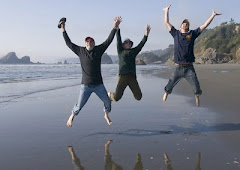
It’s Olympics time again, the Winter Games in Vancouver, where we’re already experiencing the “heartbreak” of Lindsay Vonn, whose entire life has been building towards this moment when she was expected to win as many gold medals as Michael Phelps did in the Summer Games. The heartbreak being, of course, that she was injured just before the games began, that she failed to win multiple golds, and wiped out completely in several races. The list of injuries that led to this disappointment, however, is just as heartbreaking: uprooting a family, a divorce, and not speaking to her father for the last four years. But hey, if that’s what it takes to produce a
world class athlete, who am I to quibble. As these games come to an end, this post is about the previous Olympics, where there was just as much hype and heartbreak.
I was turned off to competitive sports a long time ago when I was on the YMCA swim team as a pre-adolescent. So when the Olympics roll around every four years I usually don’t bother to watch much, even — or especially — the swimming competition.
During the last summer Olympics, however, it was hard to avoid the hype about Michael Phelps and his quest for eight gold medals, more than anyone has ever won in a single Olympics game. I ended up watching him easily win several freestyle events, then swim the heart-stopping butterfly event where he was behind and won only by one-hundredth of a second, and finally swim for his eighth gold medal in the medley relay event, where he had to depend upon his three other teammates to also swim their best race. Now, at 23, he can sit back and watch the endorsements come rolling in. But what does he do with the rest of his life?
I also watched some of the gymnastic events, mostly the girls’ team competition and a few of the individual events. It’s much more difficult to watch a sport like gymnastics as opposed to swimming: the subjectivity of the judges and the opportunity for costly mistakes make it excruciating for me as a spectator and, I imagine, excruciating for a competitor to have to experience. Several times during the course of the competitions the T.V. cameraman stuck his lens in the face of some poor young woman who had just made some momentary, but irreparable, mistake that cost her a medal in her event. Her tears and anguish were on display for millions of people around the world to witness. It’s just another example of the lack of privacy any public figure must relinquish, but you feel sorry for her, nonetheless. And per usual, there were complaints that the judges unfairly awarded a medal to the host country’s Chinese competitor, despite the major error she committed in one of her individual events.
Of course these athletes, with their flag waving and anthem signing gestures of patriotism, complicity agree to participate in these games that are political games as well. They interviewed Serena and Venus Williams about coming to the Olympics despite having to rush back to the States for the U.S Open, and they delivered the expected paean to patriotism: we’re so happy to be representing our country and participating in one of the most exciting and important events in the world. What else could they say? We’d get accused by the media of being unpatriotic and selfish if we didn’t come to play so we have to do this for our careers? We have to show the Chinese that despite their dominance of gold medals, America is still the most powerful imperialistic country in the world and intends to remain as such no matter what it takes? Neither Serena nor Venus won an individual gold medal (they won in the doubles) but neither did the Chinese. Kobe Bryant of the Los Angeles Lakers was also there to do his patriotic duty to himself by telling the interviewer that his team was a special team that appreciated the significance of representing your country, doing damage control for previous basketball teams of NBA superstars who were accused of not taking the games seriously enough, and damage control for his own reputation as an accused rapist and renegade.
Then there was Dara Torres, the 41-year old wonder who was participating in her fourth or fifth Olympics (not in consecutive order) who was out to prove that with millions of dollars in endorsements to pay for the state of the art training and attention it took to get her body into shape to beat 20-somethings in the 50 meter freestyle, anyone could be in the Olympics at 41. They showed pictures of trainers walking on her muscles for massage, while others hovered over her weight-lifting routines, and still others directed her Pilates, yoga, and meditation sessions. All for her eleven seconds of fame, where she came in second. She was very gracious and smiled her toothy grin, but you can bet she was devastated.
So back to what you do with your life after the gold or silver. Mark Spitz became a dentist, of all things (see the blog spot Dental Insurance, Or the Lack Thereof). Michael Phelps gets caught smoking a hookah on camera. Some of the ice skaters join the Ice Capades, a few become sports commentators, but most of them join the rest of us in obscurity, where we have to generate our own sense of self worth without the aid of the TV camera. I finally threw out all my swimming medals from when I was a kid when my own children were still kids. Max was appalled, and made me give him several golds to put in his pile of accumulated junk. Now his chess trophies line the top of the dresser in his former room, and when he comes home for xmas/hannukah this year we’re going to make him put them away somewhere so we have more room for our accumulated junk.
A postscript about the Winter Olympics. Because NBC overbid for the rights to broadcast the games and had to make as much money as possible, the frequency of commercials ruined my already lackluster attempts at watching even the interesting sports, like figure skating. After two hours of commercial bombardment during prime time at night, like most baby boomers I was already nodding out by nine, when they showed the skaters in contention for the medals, and asleep by ten (only for a couple of hours, though, as that’s all I get at one stretch these days; if they aired the show at midnight, I might have seen a few triple axels or double salchows, whatever they are). Ah well, it’s finally over, the Canadian hockey team beating the Americans. Amen.
Monday, March 1, 2010

Thursday, February 4, 2010
Marriage
I wrote this piece on marriage before Mark was diagnosed with cancer. While it questions the institution, it pays homage to Mark’s tenacity and love, which is what it's all about.
I recently reread Shulamith Firestone’s book, The Dialectic of Sex, and while I reject the cyber solutions she posits, her description of marriage is right on the money:
“A second cultural prop to the outmoded institution is the privatization of the marriage experience: each partner enters marriage convinced that what happened to his parents, what happened to his friends can never happen to him. Though Wrecked Marriage has become a national hobby, a universal obsession—as witnessed by the booming business of guidebooks to marriage and divorce, the women’s magazine industry, an affluent class of marriage counselors and shrinks . . . still one encounters everywhere a defiant ‘We’re different’ brand of optimism in which the one good marriage in the community is habitually cited to prove that it is possible.”
I’m guilty as charged. While I’m not married, per se, I’ve lived with a partner for 33 years and have two children with that partner—Mark. I didn’t exactly rationalize our relationship with the thought that we could do it “better,” at least at the beginning. It was fraught with difficulty from day one, as I had no idea how to live with a man and he’d already spent nine years living with his first wife. Ours was more of a partnership by default (a common theme in my life). We were both living in Placitas at the time, a little village at the north end of the Sandia Mountains near Albuquerque, when our mutual friends Anne and Charlie decided to move to Arkansas where Charlie could go to Physician’s Assistant school. Mark and I both claimed that they’d told each of us we could move into their cheap little house. He was living in a leaky dome up in Dome Valley and my landlady was moving back into her house and kicking me out. We were having an affair, but it was new and I certainly was not ready for a commitment beyond that. I suggested we move into Anne and Charlie’s house as roommates. Mark would have none of that, so we moved in as lovers and I did a lot of crying those first couple of months, as I learned what it meant to live intimately with a man.
We started out keeping our finances separate. There was never any doubt that I wouldn’t marry him. But we became a couple, partying with all the other couples and families in Placitas, some of whom had previously been members of communes but had eventually drifted into more traditional relationships. The months somehow turned into years. We were both so poor we eventually pooled our resources. And we started building a house together on the land I had bought outside the village before we were together. (I’d borrowed the down payment from my mother and made monthly payments; in those days, land was cheap.) Five years later, we had our first child. Seven years later we had our second one.
Before we had the first one there was talk of extending our family to include a female friend of ours who I had known since college. She was single, she and Mark got along well, she loved New Mexico, and we didn’t want to be a nuclear family. We talked about having two mothers, but I don’t think we talked about our being two wives—at least with her. I always thought it would be a good idea. But we had lots of good ideas in those days and few of them came to fruition. So I ended up in a nuclear family situation, rationalizing like all the rest, that we wouldn’t make the same mistakes our parents made, that our generation was more enlightened and better able to avoid the pitfalls of marriage, particularly with regard to a woman’s position in society. I don’t know why we made those assumptions, as on a daily basis we had to deal with all the cultural issues that had never been resolved, particularly the woman’s issue. I fought like hell to maintain a position of equality and independence, both circumstantially and psychologically. It made for a very combative relationship that ultimately elicited resentment and regret.
But for some reason we stayed together. Inertia? Money (we never made any)? The kids (our older son once told us he’d kill us if we ever broke up)? Fear of being alone (it is a travesty in this world that our two choices are living in nuclear families or living alone)? I’ve thought about it a lot over the years, and even discussed it once with a therapist who I went to see when the built-up resentment over the battles I’d had to fight to maintain equality was making me hateful. And I finally figured out what it comes down to is loyalty. I know that Mark, as a white male who grew up in a culture of dominance against which we all have to struggle, has made that his struggle as well, and I know that he has tried, to his best ability, to shed those shackles. I also know that despite his foibles and insecurities he has been incredibly loyal to me and continues to try to make me happy.
So here I am, more than 30 years later, rereading Shulamith Firestone (I’ve searched for information about what ever happened to her after the publication of The Dialectic of Sex and have come up with nothing). My older son has been in a series of monogamous relationships since he was in high school, and is now marrying a lovely and independent woman. My younger son is still in college and to my knowledge has never had a serious relationship with anyone. Both of them at least had a less traditional upbringing than Mark and I did, were less pressured in high school to pair off and become part of a couple, and have been exposed to an array of peers and friends who function quite well outside mainstream society. But they also have the weight of the marketplace on their backs and have less opportunity to slip through the cracks that Mark and I managed to navigate because the cracks aren’t there anymore. I don’t know if either will ever have children, and although Mark and I would be doting grandparents, that may not be such a bad thing. But I fervently hope that they both find some way to live with other men and women who will care about them, be intimate with them, and create a family for them, not necessarily based on marriage between a man and a woman with two kids.
Solution: To recognize and encourage—socially, legally, economically—everyone’s personal choices about how they want to live with other people.
I recently reread Shulamith Firestone’s book, The Dialectic of Sex, and while I reject the cyber solutions she posits, her description of marriage is right on the money:
“A second cultural prop to the outmoded institution is the privatization of the marriage experience: each partner enters marriage convinced that what happened to his parents, what happened to his friends can never happen to him. Though Wrecked Marriage has become a national hobby, a universal obsession—as witnessed by the booming business of guidebooks to marriage and divorce, the women’s magazine industry, an affluent class of marriage counselors and shrinks . . . still one encounters everywhere a defiant ‘We’re different’ brand of optimism in which the one good marriage in the community is habitually cited to prove that it is possible.”
I’m guilty as charged. While I’m not married, per se, I’ve lived with a partner for 33 years and have two children with that partner—Mark. I didn’t exactly rationalize our relationship with the thought that we could do it “better,” at least at the beginning. It was fraught with difficulty from day one, as I had no idea how to live with a man and he’d already spent nine years living with his first wife. Ours was more of a partnership by default (a common theme in my life). We were both living in Placitas at the time, a little village at the north end of the Sandia Mountains near Albuquerque, when our mutual friends Anne and Charlie decided to move to Arkansas where Charlie could go to Physician’s Assistant school. Mark and I both claimed that they’d told each of us we could move into their cheap little house. He was living in a leaky dome up in Dome Valley and my landlady was moving back into her house and kicking me out. We were having an affair, but it was new and I certainly was not ready for a commitment beyond that. I suggested we move into Anne and Charlie’s house as roommates. Mark would have none of that, so we moved in as lovers and I did a lot of crying those first couple of months, as I learned what it meant to live intimately with a man.
We started out keeping our finances separate. There was never any doubt that I wouldn’t marry him. But we became a couple, partying with all the other couples and families in Placitas, some of whom had previously been members of communes but had eventually drifted into more traditional relationships. The months somehow turned into years. We were both so poor we eventually pooled our resources. And we started building a house together on the land I had bought outside the village before we were together. (I’d borrowed the down payment from my mother and made monthly payments; in those days, land was cheap.) Five years later, we had our first child. Seven years later we had our second one.
Before we had the first one there was talk of extending our family to include a female friend of ours who I had known since college. She was single, she and Mark got along well, she loved New Mexico, and we didn’t want to be a nuclear family. We talked about having two mothers, but I don’t think we talked about our being two wives—at least with her. I always thought it would be a good idea. But we had lots of good ideas in those days and few of them came to fruition. So I ended up in a nuclear family situation, rationalizing like all the rest, that we wouldn’t make the same mistakes our parents made, that our generation was more enlightened and better able to avoid the pitfalls of marriage, particularly with regard to a woman’s position in society. I don’t know why we made those assumptions, as on a daily basis we had to deal with all the cultural issues that had never been resolved, particularly the woman’s issue. I fought like hell to maintain a position of equality and independence, both circumstantially and psychologically. It made for a very combative relationship that ultimately elicited resentment and regret.
But for some reason we stayed together. Inertia? Money (we never made any)? The kids (our older son once told us he’d kill us if we ever broke up)? Fear of being alone (it is a travesty in this world that our two choices are living in nuclear families or living alone)? I’ve thought about it a lot over the years, and even discussed it once with a therapist who I went to see when the built-up resentment over the battles I’d had to fight to maintain equality was making me hateful. And I finally figured out what it comes down to is loyalty. I know that Mark, as a white male who grew up in a culture of dominance against which we all have to struggle, has made that his struggle as well, and I know that he has tried, to his best ability, to shed those shackles. I also know that despite his foibles and insecurities he has been incredibly loyal to me and continues to try to make me happy.
So here I am, more than 30 years later, rereading Shulamith Firestone (I’ve searched for information about what ever happened to her after the publication of The Dialectic of Sex and have come up with nothing). My older son has been in a series of monogamous relationships since he was in high school, and is now marrying a lovely and independent woman. My younger son is still in college and to my knowledge has never had a serious relationship with anyone. Both of them at least had a less traditional upbringing than Mark and I did, were less pressured in high school to pair off and become part of a couple, and have been exposed to an array of peers and friends who function quite well outside mainstream society. But they also have the weight of the marketplace on their backs and have less opportunity to slip through the cracks that Mark and I managed to navigate because the cracks aren’t there anymore. I don’t know if either will ever have children, and although Mark and I would be doting grandparents, that may not be such a bad thing. But I fervently hope that they both find some way to live with other men and women who will care about them, be intimate with them, and create a family for them, not necessarily based on marriage between a man and a woman with two kids.
Solution: To recognize and encourage—socially, legally, economically—everyone’s personal choices about how they want to live with other people.
Tuesday, January 12, 2010
Drug Company Advertising
Even though we have satellite TV, which we got for our younger son and so Mark could follow the NBA, I don’t watch it much, and when I do I am continually astounded by the commercials. Instead of seeing the U.S.A. in your Chevrolet and getting your wash sparkling clean with Tide and Cheer, we can now ingest drugs for erectile dysfunction, arthritis, constipation, osteoporosis, high cholesterol, fibromyalgia, dry eyes, and depression. The commercials all end with a list of potential side effects for each drug —dizziness, weight gain, blindness and heart attack—along with the caveat, “Ask your doctor if this drug is right for you,” but what do we need doctors for? The drug companies have identified the diseases, designed the drugs, and have apparently bought off the doctors who now prescribe the medicine. The patient just needs to tell the doctor, “I saw Viagra advertised on TV and I want some,” and voila, he’s got an erection.
I’m old enough to remember when doctors not only diagnosed and prescribed the drugs, they actually came to your house to do so. When I was in grade school, our doctor in Colorado Springs came to the house when we were too sick to go to his office. Which usually meant we had the chicken pox, measles, mumps, or the flu. Now, of course, they have vaccines for all of these diseases, but in those days all the kids got them and were down for at least a week or two. I remember when I had one of them, and the doctor wanted to give me a shot, I ran out of the bedroom and into the closet in the kitchen that went under the stairs. This was a very deep closet, full of all kinds of things besides clothes, and required a major extraction by my parents, with a lot of kicking and screaming on my part. But the good-natured doctor waited until I quit screaming and still gave me the shot.
Even with the new vaccines there are plenty of diseases out there that need a drug — mainly all our new “lifestyle” diseases — ergo all the drug advertising on TV to all the couch potatoes watching it. Everyone over 60 seems to be on medicine to reduce their high blood pressure and cholesterol. Type II diabetes is epidemic, but weight loss medication will allow you to drop the pounds without ever passing up that piece of strawberry cheesecake or walking farther than the car to the house. Environmentally caused auto immune diseases like fibromyalgia are bringing once active people to their knees with chronic pain and loss of energy. Lyrica, however, will help you do all those things you used to love to do, like watering your plants and going on vacation to Bermuda. Baby boomers are dropping like flies with hip, knee, and even shoulder replacements, after years of pounding their joints by running on pavement or climbing across all those scree fields on their mountain ascents. But Boniva once a month will keep those bones strong and sturdy, and Ativa once a year will keep that “on the go woman” going.
After being bombarded nightly by these unfulfilled promises no wonder everyone is depressed and can’t sleep. But there are plenty of drugs for that, too. No more of those hard core barbiturates, you can take Ambien and Lunesta, which will lull you into a gentle sleep and make you fresh and alert the next day, assuming you don’t have any of the potential side effects like walking in your sleep and falling down the stairs or falling asleep while you’re driving, which a former Santa Fe county commissioner did, claiming Ambien made him crash into that parked car on the side of the street. If you’re depressed you can take Zoloft or Prozac and get rid of all that anxiety and worry about whether you’re going to have to spend the last of your paycheck on a tank of gas or enough groceries to get you through the week. You may even have to cancel your high-speed Internet connection, or god forbid, your satellite TV service that allowed you to find out all about Prozac in the first place.
So we’re all going to live to be 90 as long as we take our daily regimen of 20 or so different medications every morning and night that are probably working against each other to counteract each one’s desired effect, leaving us all demented. But hey, we’re not dead, and apparently that’s all that matters.
I’m old enough to remember when doctors not only diagnosed and prescribed the drugs, they actually came to your house to do so. When I was in grade school, our doctor in Colorado Springs came to the house when we were too sick to go to his office. Which usually meant we had the chicken pox, measles, mumps, or the flu. Now, of course, they have vaccines for all of these diseases, but in those days all the kids got them and were down for at least a week or two. I remember when I had one of them, and the doctor wanted to give me a shot, I ran out of the bedroom and into the closet in the kitchen that went under the stairs. This was a very deep closet, full of all kinds of things besides clothes, and required a major extraction by my parents, with a lot of kicking and screaming on my part. But the good-natured doctor waited until I quit screaming and still gave me the shot.
Even with the new vaccines there are plenty of diseases out there that need a drug — mainly all our new “lifestyle” diseases — ergo all the drug advertising on TV to all the couch potatoes watching it. Everyone over 60 seems to be on medicine to reduce their high blood pressure and cholesterol. Type II diabetes is epidemic, but weight loss medication will allow you to drop the pounds without ever passing up that piece of strawberry cheesecake or walking farther than the car to the house. Environmentally caused auto immune diseases like fibromyalgia are bringing once active people to their knees with chronic pain and loss of energy. Lyrica, however, will help you do all those things you used to love to do, like watering your plants and going on vacation to Bermuda. Baby boomers are dropping like flies with hip, knee, and even shoulder replacements, after years of pounding their joints by running on pavement or climbing across all those scree fields on their mountain ascents. But Boniva once a month will keep those bones strong and sturdy, and Ativa once a year will keep that “on the go woman” going.
After being bombarded nightly by these unfulfilled promises no wonder everyone is depressed and can’t sleep. But there are plenty of drugs for that, too. No more of those hard core barbiturates, you can take Ambien and Lunesta, which will lull you into a gentle sleep and make you fresh and alert the next day, assuming you don’t have any of the potential side effects like walking in your sleep and falling down the stairs or falling asleep while you’re driving, which a former Santa Fe county commissioner did, claiming Ambien made him crash into that parked car on the side of the street. If you’re depressed you can take Zoloft or Prozac and get rid of all that anxiety and worry about whether you’re going to have to spend the last of your paycheck on a tank of gas or enough groceries to get you through the week. You may even have to cancel your high-speed Internet connection, or god forbid, your satellite TV service that allowed you to find out all about Prozac in the first place.
So we’re all going to live to be 90 as long as we take our daily regimen of 20 or so different medications every morning and night that are probably working against each other to counteract each one’s desired effect, leaving us all demented. But hey, we’re not dead, and apparently that’s all that matters.
Thursday, December 24, 2009
Sustainability
Sustainability is a word often bandied about by environmentalists, economists, and politicians trying to establish a platform. I don’t remember ever using the word myself when I decided to live in rural New Mexico for the rest of my life. Whatever we were after was more along proletarian lines, or the opposite of whatever we defined as bourgeois. There were plenty of other words to describe these goals: hippie, back to the land, alternative generation, or counter culture, but they all somehow missed the fundamental motive of wanting to discard any notion of being part of consumer culture while advocating for the overthrow of the government. How we could achieve the second goal in Placitas or El Valle, New Mexico, I don’t know, but we certainly could be nonconsummers when we couldn’t afford more than a weekly trip to town or anywhere you could spend money. Did that mean we were living a sustainable life? Not really, but it was probably as close as we could come to being self-sufficient without being labeled Luddites and maintaining some semblance of normalcy for our kids.
We weren’t prepared to live like our Hispano neighbors had only fifty years ago, when they grew all the food they consumed except for coffee and sugar. They grew all their vegetables and fruit and canned it for the winter. They raised sheep, pigs, cows, and goats and dried the meat for the winter. They grew and milled their own wheat for bread. They made most of their own clothes and musical instruments and actually spent time at each other’s houses talking, singing, dancing, and being neighborly. That’s the most important thing we learned in our El Valle lives: becoming buen vecinos.
I was surprised to learn recently that writer Jack London moved to a 1,400 acre ranch in northern California in 1905 where he could “leave the land the better for my having been.” He wrote in his journal, “My work on this land, and my message to America, go hand in hand.” He said he spent two hours a day writing, which is how he supported himself, and ten hours a day farming.
I thought if I worked on the land then I could have a message for America, that there was a better (whoops, not a poststructuralist word), more equitable way to live, if not sustainably, then at least consciously and lightly. Like building your own house, cutting firewood to heat your house, growing some of your own food, fixing, or at least maintaining, your cars, learning how to take care of yourself. If we could do everything the pioneers did, we could at least get a taste of a day in the life where everything was tended to: your body out in the garden, your mind at the computer, and hopefully your soul, the melding of the two. I try to never sit at the computer for more than a two-hour stretch (except when I had a deadline to finish the index for Malcolm Ebright’s book, Witches of Abiquiu, after which I gave up doing indexes) or I won’t have a body left to sustain a mind.
Perhaps the agenda calls for watering the vegetable garden or garlic field, which is really not that difficult as almost everything is on a drip irrigation system—I turn a few valves on and off and the plants are wet in a matter of hours. Of course, because everything is so sufficiently watered, things grow in abundance, and more and more of my time is devoted to dealing with the harvest. Some days I’m on my hands and knees thinning the carrots that have to be thinned in stages, rather than one fell swoop. Other days I’m stooped over searching for string beans hiding on dense vines only a foot high. At least the sugar snap peas grow six feet tall, although that means I’m constantly adding new string to the trellis to catch the incessant growth. Every day I search for the disgusting green tomato worms that if left unsquished would soon look like the caterpillars in Dune.
Irrigating the pasture is not so easy. One of my neighbors calls the corner of the field to which he can never get the water “Arizona.” We have a Sahara, a Gobi, and a Death Valley. No matter how many feeder ditches we dig off the main acequia, no matter how fast we get the water, or how much water we get, there are bare, brown spots that will never receive the sparkling waters of the Rio de Las Trampas. Too bad for them.
On the days when I do have to go to town, I always anticipate with great relief the final turn onto the dirt road that leads two miles to this village of twenty families. I find myself playing a game, pretending that this is the first time I have come here, that I have never before seen the lush, green valley or mountain peaks that are the setting for the village homes. I try to remember what I felt years ago when we first stumbled upon this place on one of our periodic, wistful trips to northern New Mexico when we still lived in Placitas, where we no longer wanted to live. I distinctly remember saying to myself, “You’ll never be able to live here,” as we made our way along the road of tin-roofed, handmade adobe houses painted lovely greens and pinks, sitting in fields of timothy grass, grazed by cows and horses, with at least one mandatory junked car on display. I thought at the time that it was probably the most beautiful landscape in New Mexico, if not the world, and I still do: the 13,000-foot peaks of the Sangre de Cristo Mountains provide the backdrop, the piñon-juniper hills rolling to sandstone cliffs the vista. Now, as I drive down the road, I never fail to marvel that I am able to live here, surrounded by all the things that are meaningful and comforting to me. I lead a privileged, if not sustainable, life.
We weren’t prepared to live like our Hispano neighbors had only fifty years ago, when they grew all the food they consumed except for coffee and sugar. They grew all their vegetables and fruit and canned it for the winter. They raised sheep, pigs, cows, and goats and dried the meat for the winter. They grew and milled their own wheat for bread. They made most of their own clothes and musical instruments and actually spent time at each other’s houses talking, singing, dancing, and being neighborly. That’s the most important thing we learned in our El Valle lives: becoming buen vecinos.
I was surprised to learn recently that writer Jack London moved to a 1,400 acre ranch in northern California in 1905 where he could “leave the land the better for my having been.” He wrote in his journal, “My work on this land, and my message to America, go hand in hand.” He said he spent two hours a day writing, which is how he supported himself, and ten hours a day farming.
I thought if I worked on the land then I could have a message for America, that there was a better (whoops, not a poststructuralist word), more equitable way to live, if not sustainably, then at least consciously and lightly. Like building your own house, cutting firewood to heat your house, growing some of your own food, fixing, or at least maintaining, your cars, learning how to take care of yourself. If we could do everything the pioneers did, we could at least get a taste of a day in the life where everything was tended to: your body out in the garden, your mind at the computer, and hopefully your soul, the melding of the two. I try to never sit at the computer for more than a two-hour stretch (except when I had a deadline to finish the index for Malcolm Ebright’s book, Witches of Abiquiu, after which I gave up doing indexes) or I won’t have a body left to sustain a mind.
Perhaps the agenda calls for watering the vegetable garden or garlic field, which is really not that difficult as almost everything is on a drip irrigation system—I turn a few valves on and off and the plants are wet in a matter of hours. Of course, because everything is so sufficiently watered, things grow in abundance, and more and more of my time is devoted to dealing with the harvest. Some days I’m on my hands and knees thinning the carrots that have to be thinned in stages, rather than one fell swoop. Other days I’m stooped over searching for string beans hiding on dense vines only a foot high. At least the sugar snap peas grow six feet tall, although that means I’m constantly adding new string to the trellis to catch the incessant growth. Every day I search for the disgusting green tomato worms that if left unsquished would soon look like the caterpillars in Dune.
Irrigating the pasture is not so easy. One of my neighbors calls the corner of the field to which he can never get the water “Arizona.” We have a Sahara, a Gobi, and a Death Valley. No matter how many feeder ditches we dig off the main acequia, no matter how fast we get the water, or how much water we get, there are bare, brown spots that will never receive the sparkling waters of the Rio de Las Trampas. Too bad for them.
On the days when I do have to go to town, I always anticipate with great relief the final turn onto the dirt road that leads two miles to this village of twenty families. I find myself playing a game, pretending that this is the first time I have come here, that I have never before seen the lush, green valley or mountain peaks that are the setting for the village homes. I try to remember what I felt years ago when we first stumbled upon this place on one of our periodic, wistful trips to northern New Mexico when we still lived in Placitas, where we no longer wanted to live. I distinctly remember saying to myself, “You’ll never be able to live here,” as we made our way along the road of tin-roofed, handmade adobe houses painted lovely greens and pinks, sitting in fields of timothy grass, grazed by cows and horses, with at least one mandatory junked car on display. I thought at the time that it was probably the most beautiful landscape in New Mexico, if not the world, and I still do: the 13,000-foot peaks of the Sangre de Cristo Mountains provide the backdrop, the piñon-juniper hills rolling to sandstone cliffs the vista. Now, as I drive down the road, I never fail to marvel that I am able to live here, surrounded by all the things that are meaningful and comforting to me. I lead a privileged, if not sustainable, life.
Sunday, December 13, 2009
Hero Worship
Ironically, my Westminster Dog Show piece, which ends with the phrase, “Yeah, Tiger Woods” (the dog), was posted just before the golfer Tiger Woods’ escapes were aired in public. The following piece, also written before the airing of Woods’ troubles, seems particularly appropriate to the situation.
They stripped Michael Phelps of his Wheaties gig for smoking pot. Gee whiz. He’s twenty-three or twenty-four, doing what most other twenty-year olds do at some point in their lives and he gets taken off the back of a cereal box. But the question is, why is he, or Alex Rodriguez or Mark McGuire or O.J. Simpson, on the back of a cereal box in the first place? I assume being on the cereal box means that kids are supposed to look at the picture and want to be just like you, meaning they want to be born with the physical attributes and the psychological ambition and drive that allow these guys to make it to the top in their respective sports, where they are paid millions of dollars to single mindedly pursue success in a very narrow field of interest. What is heroic about that? Is making millions of dollars heroic or simply what our society equates with success? If it’s heroic, why don’t they put the pictures of corporate CEOs on the back of cereal boxes. Or do you have to earn millions of dollars and play a sport to be a hero. Is it the single mindedness (or simple mindedness, as the case may be)? Then why aren’t members of the U.S. House of Representatives on the back of cereal boxes. One certainly has to be single minded to disrupt your life every two years to raise the money for re-election.
Don’t get me wrong. I’m not shedding any tears for Michael Phelps. He knew what was expected of him when he signed up to make millions by selling Wheaties or Nike sneakers. It’s us I feel sorry for. Apparently our lives are so bereft that twenty- something swimmers (swimmers, for Christ sake!) are the people we find most interesting and want to spend time with by reading People Magazine and joining fan clubs. I could understand wanting to spend a day with, or wanting to know better, Emily Dickinson or Che Guevara or Raymond Williams, but what on earth are you going to talk about with Michael other than the finer points of the breast stroke or how to get the most out of your turn?
While this kind of hero worship reveals the bankruptcy of our intellect, raising a good Samaritan to the status of hero reveals our emotional bankruptcy. Shouldn’t we expect any and everyone to stop to help someone on the road who is broken down or been in an accident? Why then do you see the letter to the editor telling everyone about the “hero” who stopped to help his wife change her tire, calling it “beyond the call of duty. No, it is the call of duty to help your fellow man or woman. Poor “Sully” Sullivan, the pilot who set the plane down in the Hudson River last year. What a reluctant hero he was. Or rather, was his wife, who, when interviewed by every TV and radio station in the country said, “I really don’t think Sully is a hero.” With the skills and judgment he had honed over a long career, and with the luck of the day, he saved a bunch of peoples lives as well as his own skin. Do we elevate him to hero status because we’re wrapped in our cocoons of self-concern and self-doubt and worry we would fail the test?
They stripped Michael Phelps of his Wheaties gig for smoking pot. Gee whiz. He’s twenty-three or twenty-four, doing what most other twenty-year olds do at some point in their lives and he gets taken off the back of a cereal box. But the question is, why is he, or Alex Rodriguez or Mark McGuire or O.J. Simpson, on the back of a cereal box in the first place? I assume being on the cereal box means that kids are supposed to look at the picture and want to be just like you, meaning they want to be born with the physical attributes and the psychological ambition and drive that allow these guys to make it to the top in their respective sports, where they are paid millions of dollars to single mindedly pursue success in a very narrow field of interest. What is heroic about that? Is making millions of dollars heroic or simply what our society equates with success? If it’s heroic, why don’t they put the pictures of corporate CEOs on the back of cereal boxes. Or do you have to earn millions of dollars and play a sport to be a hero. Is it the single mindedness (or simple mindedness, as the case may be)? Then why aren’t members of the U.S. House of Representatives on the back of cereal boxes. One certainly has to be single minded to disrupt your life every two years to raise the money for re-election.
Don’t get me wrong. I’m not shedding any tears for Michael Phelps. He knew what was expected of him when he signed up to make millions by selling Wheaties or Nike sneakers. It’s us I feel sorry for. Apparently our lives are so bereft that twenty- something swimmers (swimmers, for Christ sake!) are the people we find most interesting and want to spend time with by reading People Magazine and joining fan clubs. I could understand wanting to spend a day with, or wanting to know better, Emily Dickinson or Che Guevara or Raymond Williams, but what on earth are you going to talk about with Michael other than the finer points of the breast stroke or how to get the most out of your turn?
While this kind of hero worship reveals the bankruptcy of our intellect, raising a good Samaritan to the status of hero reveals our emotional bankruptcy. Shouldn’t we expect any and everyone to stop to help someone on the road who is broken down or been in an accident? Why then do you see the letter to the editor telling everyone about the “hero” who stopped to help his wife change her tire, calling it “beyond the call of duty. No, it is the call of duty to help your fellow man or woman. Poor “Sully” Sullivan, the pilot who set the plane down in the Hudson River last year. What a reluctant hero he was. Or rather, was his wife, who, when interviewed by every TV and radio station in the country said, “I really don’t think Sully is a hero.” With the skills and judgment he had honed over a long career, and with the luck of the day, he saved a bunch of peoples lives as well as his own skin. Do we elevate him to hero status because we’re wrapped in our cocoons of self-concern and self-doubt and worry we would fail the test?
Sunday, November 29, 2009
Westminster Dog Show
“Best in Show,” which is one of the funniest movie spoofs ever made, really doesn’t do justice to the absurdity and pathos of the Westminster Dog Show. The contrast between beautiful dogs (we’ll talk about the distastefully groomed and ugly ones later) and their handlers is almost too much to take. Do you ever notice the women handlers’ shoes? They sparkle. Remember those flats we wore to high school in the sixties, with our matching lime green and pink sweater and skirt outfits? Well, most of them wear flats like that but they actually sparkle. Usually they’re black, but in this year’s show one handler was actually wearing silver ones. Is there a dress code for women handlers that for some reason says that to run around the floor of Madison Square Garden with a dog on a leash you have to wear the ugliest shoes ever made?
Are they also required to wear these weird suits that have little flairs at the waist over tight skirts that show off their bottoms? And a lot of the bottoms are of ample proportions in the Westminster Dog Show, as well as bosoms, which when their owners run around the floor with their dogs do a lot of jiggling. To be fair, there are plenty of heavy-bottomed men handlers at the show as well, but their bulk is more discreetly hidden in your typical street suit (although one guy this year wore a tuxedo!). I didn’t see one handler who looked like that cute little Parker Posey from “Best in Show.”
But enough about the handlers. The huskies and terriers and St. Bernards and spaniels are all beautiful, of course: pampered, indulged, and treated like children rather than dogs, but still beautiful. Even the standard poodle, before grooming, is kind of cute. But what they do to the poor poodle — this year’s Westminster finalist was black, the one in Best of Show is white — is beyond the pale. First they shave all the hair off its skinny little legs except for these puffballs at the ankles. Then they attack the poor dog’s rump with the clippers until the only hair left on its body is around the ruff. Then they shave the dog’s face, where any semblance of its embarrassment could be hidden, and tease it’s topknot into a beehive. Finally, they produce a puffball at the end of its tail, and voila, you have the ugliest, most humiliatingly desecrated creature one could ever create. I don’t have the heart to do the research to find out who started this hideous practice, but they’re all complicit, as these poor poodles seem to win more Best in Shows than just about any other breed. This year, a cute old Sussex spaniel named Tiger Woods won Best in Show. I’m not quite sure how this happened, as the woman who is the judge for the final award not only wore sparkly shoes but a sparkly dress and arrived in a limousine after being sequestered in a hotel without a TV so she couldn’t see any of the previous Best in Breed winners before she picked the Best in Show. She stood imperiously on the floor in her sparkly high heels and diamonds while little old Tiger Woods ran his little old legs like spinwheels down the length of the floor, ears flapping, to the roar of the crowd. Yeah, Tiger Woods!
Are they also required to wear these weird suits that have little flairs at the waist over tight skirts that show off their bottoms? And a lot of the bottoms are of ample proportions in the Westminster Dog Show, as well as bosoms, which when their owners run around the floor with their dogs do a lot of jiggling. To be fair, there are plenty of heavy-bottomed men handlers at the show as well, but their bulk is more discreetly hidden in your typical street suit (although one guy this year wore a tuxedo!). I didn’t see one handler who looked like that cute little Parker Posey from “Best in Show.”
But enough about the handlers. The huskies and terriers and St. Bernards and spaniels are all beautiful, of course: pampered, indulged, and treated like children rather than dogs, but still beautiful. Even the standard poodle, before grooming, is kind of cute. But what they do to the poor poodle — this year’s Westminster finalist was black, the one in Best of Show is white — is beyond the pale. First they shave all the hair off its skinny little legs except for these puffballs at the ankles. Then they attack the poor dog’s rump with the clippers until the only hair left on its body is around the ruff. Then they shave the dog’s face, where any semblance of its embarrassment could be hidden, and tease it’s topknot into a beehive. Finally, they produce a puffball at the end of its tail, and voila, you have the ugliest, most humiliatingly desecrated creature one could ever create. I don’t have the heart to do the research to find out who started this hideous practice, but they’re all complicit, as these poor poodles seem to win more Best in Shows than just about any other breed. This year, a cute old Sussex spaniel named Tiger Woods won Best in Show. I’m not quite sure how this happened, as the woman who is the judge for the final award not only wore sparkly shoes but a sparkly dress and arrived in a limousine after being sequestered in a hotel without a TV so she couldn’t see any of the previous Best in Breed winners before she picked the Best in Show. She stood imperiously on the floor in her sparkly high heels and diamonds while little old Tiger Woods ran his little old legs like spinwheels down the length of the floor, ears flapping, to the roar of the crowd. Yeah, Tiger Woods!
Thursday, November 5, 2009
Consumer Culture
Somehow the idea of intellectuals deconstructing Enlightenment values that failed to enlighten and liberate while mindlessly participating in privileged consumer culture seems absurd. And the idea becomes more than absurd when it declares that the values that determine how I try to live my life are mere constructs based on style, not substance, that there is no rationality and truth, progress is a myth, and pluralism and heterogeneity are alternatives to mainstream, normative life. Of course, all of us who came of age during the sixties revolution of consciousness were creating and living these rejections and assumptions. But the hope was not that, in the inimical words of Terry Eagleton, “A radical assault on fixed hierarchies of value [would] merge[d] effortlessly with the revolutionary leveling of all values known as the marketplace.” In the rush to smash hierarchy, it seems the postmodernists forgot that it is necessary to smash capitalism as well.
The juxtaposition of two halves of page A12 in a recent New York Times couldn’t have been a more revealing testament to just how decadent, how obscene, really, our consumer culture has become. On the left side of the page was a Bloomingdale’s advertisement with an anorexic model decked out in a “dyed sheared mink double breasted coat.” On the right side of the page was an article detailing the incursions of Sudanese Arab gunmen into Chad, where they were killing and wounding hundreds of civilians.
How do these mink coated people live with themselves? I know that money buys you protection from things you don’t want to know or think about, but they do pick up the New York Times occasionally and see page A12, don’t they? Even if wealth is equated with success, isn’t there some line over which the excesses begin to bother them, just a little? Like “dyed sheared mink double breasted coats?”
Apparently not. Maybe this blog can’t really be separated from the one on Capitalism — cultural materialism is inextricably linked to an economic analysis — but there is still some part of me that believes there must be a human, gut level connection that transcends these analyses. I know, I know, this has been wrestled with by the likes of Rousseau,Voltaire, Locke and Weil and everyone one else worth his or her salt, but there’s just something about conspicuous consumption that baffles me. One clichéd answer is that once shopping and accumulating goods becomes the focus of your life, you can never have enough because then you wouldn’t have anything to do. But why does one think that shopping and accumulating goods is fun? I hate shopping: clothes shopping, household goods shopping, even food shopping. I rarely end up with any piece of clothing I truly like, buying toilet paper is boring, and I race through the grocery store as fast as possible so I can get home as fast as possible.
Maybe that’s my problem. I don’t particularly like leaving home. Home is my life’s work, essentially. It’s where I surround myself with everything, or almost everything (I can’t make my kids stay home forever) I value. Inside my passive solar adobe house I have access to an incredible music collection (Mark is an incomparable audiophile and our record collection is comprehensive); books I’ve read once, am waiting to read, and will probably read several more times before I die; a lifetime collection of art and photos on the walls, ranging from John Wenger’s spaceship landings, Mark’s contemporary santos (Emily Dickinson, Rene Magritte), and Alan Labb’s fat-bellied men to collages of each of our children from infancy to public school; our two dogs Django and Sammy, and Mavis the cat (who also belong outside, but seem to want to stay inside as they age alongside us); and various lifelines out—telephone, satellite internet, and satellite TV. Outside I have ten acres of pasture, orchard, vegetable garden, flower gardens, casita, river frontage, and small village life, which is both colorful, comforting, and fraught with annoyances, just like any other place one decides to call home.
Why do I need to go out other than to see some of my friends occasionally, go to a movie theater to see a first-run movie instead of waiting for it to appear on DVD (although I can barely stand the commercials and booming sound in the theater), hear some live music (there’s always YouTube), or god forbid, actually have to attend a meeting to cover it for La Jicarita News, the alternative journal we publish monthly. When we first started producing the paper we were caught up in the immediacy of the battles among the Forest Service, environmentalists, and community people over access to forest resources. Those battles, at least for the communities, were largely lost, and the Forest Service barely has a budget left to mark enough trees for community firewood. The environmentalists went on to other issues like wolves and salamanders, which fortunately don’t live in northern New Mexico (it was the spotted owl that started all the ruckus in the 90s when the enviros insisted it lived in our woods). While other battles still rage, over the commodification of water and the nuclear mission at Los Alamos National Laboratory, we see that our fourteen-year newspaper run may be nearing its end. We don’t even want to attend the few meetings we’ve determined must be attended to maintain our viability.
So because I don’t go anywhere, I certainly don’t need to shop for clothes. If I happen to find a good deal on a shirt or pair of shoes at the thrift store, which I do like to cruise through for additions to my cow collection or a file cabinet for 30 years of collected papers, I make it a policy to give away a shirt or pair of shoes I already own. One of my favorite entertainments is to periodically go through my closets and cabinets and throw or give things away. With tremendous delight I watch files of battles I’ve had with the Forest Service since 1985 burn up in the wood stove. I sigh with satisfaction when I’ve depleted a closet enough to be able to push hangers from end to end to see what I actually still own.
I chose time over money. If through some fortuitous circumstance I ended up in a life with both, maybe I’d like to shop, too. But if the “me” in that life was still the “me” in this life, I would hope I knew where draw the line in the sand. And a “dyed sheared mink double breasted coat” wouldn’t even be in my cultural vocabulary.
The juxtaposition of two halves of page A12 in a recent New York Times couldn’t have been a more revealing testament to just how decadent, how obscene, really, our consumer culture has become. On the left side of the page was a Bloomingdale’s advertisement with an anorexic model decked out in a “dyed sheared mink double breasted coat.” On the right side of the page was an article detailing the incursions of Sudanese Arab gunmen into Chad, where they were killing and wounding hundreds of civilians.
How do these mink coated people live with themselves? I know that money buys you protection from things you don’t want to know or think about, but they do pick up the New York Times occasionally and see page A12, don’t they? Even if wealth is equated with success, isn’t there some line over which the excesses begin to bother them, just a little? Like “dyed sheared mink double breasted coats?”
Apparently not. Maybe this blog can’t really be separated from the one on Capitalism — cultural materialism is inextricably linked to an economic analysis — but there is still some part of me that believes there must be a human, gut level connection that transcends these analyses. I know, I know, this has been wrestled with by the likes of Rousseau,Voltaire, Locke and Weil and everyone one else worth his or her salt, but there’s just something about conspicuous consumption that baffles me. One clichéd answer is that once shopping and accumulating goods becomes the focus of your life, you can never have enough because then you wouldn’t have anything to do. But why does one think that shopping and accumulating goods is fun? I hate shopping: clothes shopping, household goods shopping, even food shopping. I rarely end up with any piece of clothing I truly like, buying toilet paper is boring, and I race through the grocery store as fast as possible so I can get home as fast as possible.
Maybe that’s my problem. I don’t particularly like leaving home. Home is my life’s work, essentially. It’s where I surround myself with everything, or almost everything (I can’t make my kids stay home forever) I value. Inside my passive solar adobe house I have access to an incredible music collection (Mark is an incomparable audiophile and our record collection is comprehensive); books I’ve read once, am waiting to read, and will probably read several more times before I die; a lifetime collection of art and photos on the walls, ranging from John Wenger’s spaceship landings, Mark’s contemporary santos (Emily Dickinson, Rene Magritte), and Alan Labb’s fat-bellied men to collages of each of our children from infancy to public school; our two dogs Django and Sammy, and Mavis the cat (who also belong outside, but seem to want to stay inside as they age alongside us); and various lifelines out—telephone, satellite internet, and satellite TV. Outside I have ten acres of pasture, orchard, vegetable garden, flower gardens, casita, river frontage, and small village life, which is both colorful, comforting, and fraught with annoyances, just like any other place one decides to call home.
Why do I need to go out other than to see some of my friends occasionally, go to a movie theater to see a first-run movie instead of waiting for it to appear on DVD (although I can barely stand the commercials and booming sound in the theater), hear some live music (there’s always YouTube), or god forbid, actually have to attend a meeting to cover it for La Jicarita News, the alternative journal we publish monthly. When we first started producing the paper we were caught up in the immediacy of the battles among the Forest Service, environmentalists, and community people over access to forest resources. Those battles, at least for the communities, were largely lost, and the Forest Service barely has a budget left to mark enough trees for community firewood. The environmentalists went on to other issues like wolves and salamanders, which fortunately don’t live in northern New Mexico (it was the spotted owl that started all the ruckus in the 90s when the enviros insisted it lived in our woods). While other battles still rage, over the commodification of water and the nuclear mission at Los Alamos National Laboratory, we see that our fourteen-year newspaper run may be nearing its end. We don’t even want to attend the few meetings we’ve determined must be attended to maintain our viability.
So because I don’t go anywhere, I certainly don’t need to shop for clothes. If I happen to find a good deal on a shirt or pair of shoes at the thrift store, which I do like to cruise through for additions to my cow collection or a file cabinet for 30 years of collected papers, I make it a policy to give away a shirt or pair of shoes I already own. One of my favorite entertainments is to periodically go through my closets and cabinets and throw or give things away. With tremendous delight I watch files of battles I’ve had with the Forest Service since 1985 burn up in the wood stove. I sigh with satisfaction when I’ve depleted a closet enough to be able to push hangers from end to end to see what I actually still own.
I chose time over money. If through some fortuitous circumstance I ended up in a life with both, maybe I’d like to shop, too. But if the “me” in that life was still the “me” in this life, I would hope I knew where draw the line in the sand. And a “dyed sheared mink double breasted coat” wouldn’t even be in my cultural vocabulary.
Subscribe to:
Posts (Atom)