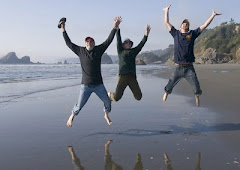
This time I went to visit Max in Scottsdale, where he moved
after living in Los Angeles, where I also visited him and described in my existential/fear
and loathing blog post .
The impression ones gets of Scottsdale is distinctly suburban, with wide, tree
lined streets bordered by meticulously manicured lawns of grass—green grass in
the middle of the Sonoran desert—cacti, ornamental cedar, pine, and palm trees,
and bougainvillea.
Yes, there was bougainvillea in bloom in December, along
with green-leafed deciduous trees and poinsettias lining driveways and porches
in the Christmas spirit. There were also trees full of green and yellow
parrots, jumping around and cackling to their hearts’ content. I assume that,
just like in the movie “The Wild Parrots of Telegraph Hill,” which tells the
story of the quirky man who fed the San Francisco flock of parrots generated
from a few stray birds that escaped their cages, these Scottsdale parrots share
the same origin story. Except there didn’t seem to be anyone around to feed
these birds; the only people I saw outside were the gardeners and plumbers and
electricians who were working on the ranch style houses in their manicured
settings.
All I could think about while walking these streets was what
it must be like five months of the year when the temperature is at least 100 degrees,
and sometimes 115, and how much water it takes to maintain the grass and flowers
and hundred-foot tall palm trees and backyard swimming pools (I saw those from
the window of the airplane when I flew in). The water comes from the Salt River
Project, an enormous system of dams and canals that first brought water to this
former farming valley. Starting in the mid 19th century farmers
built canals to redirect water from the Salt River; in the early part of the 20th
century they used their land as collateral on loans that resulted in the
construction of Roosevelt Dam, 76 miles northeast of Phoenix.
Back in the 1970s water irrigated 80,000 acres of citrus
orchards: that landscape is now reduced to about 20,000 acres. The remainder is
filled with the sprawl that is greater Phoenix: Scottsdale, Mesa, Tempe
(location of Arizona State University), Glendale. You only know you’ve passed
from one community to the next when the sign on the side of the road tells you
so.
So actually, the amount of water necessary for lawns instead
of lemons, oranges, and grapefruit is already available. But I want to know what,
besides cows, can live on green grass? I can assure you there are no cows
grazing the Scottsdale suburbs to supply the local restaurants with grass fed
beef. There are only people and palm trees and the occasional parrot, which
until the Salt River goes dry can enjoy their aberrant existence in this
Sonoran oasis.
But while we wait for the inevitable drying out, it seems
the area is losing some of its oasis status for people, especially visitors.
Since the passage of the 2010 immigration enforcement law (SB10170), which
allows the police to determine the immigration status of anyone “stopped,
detained, or arrested,” if there is “reasonable suspicion,” convention bookings
have dropped by 30 percent. In a recent Arizona
Republic article the mayor of Phoenix was quoted as saying, “What you may
have read about our Legislature, don’t hold against the rest of us. The rest of
us, we’re normal. We like diversity.”
Max and I decided not to spend any more time checking out
how normal the Phoenix folks are and we drove to Albuquerque, another town that
certainly appears to like diversity, although the New Mexico governor, like her
Arizona counterpart, is doing her best to make it appear otherwise: at top of
her agenda is overturning the law that allows undocumented immigrants to get
drivers licenses. Albuquerque is also another sprawling western city, like
Phoenix, dependent upon imported water to sustain its population.
But the good thing is that it’s situated in the high desert
instead of the low desert and shortly after we got there, nighttime
temperatures dropped into the teens. Which means there aren’t that many
tourists who require resort hotels and golf courses and conventions centers
like those of Scottsdale and Phoenix, which also means that Albuquerque has
managed to retain some funky soul. Just ask Brian Cranston.