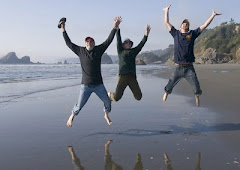
That’s Emma Goldman speaking. I came of age at the time in
history, the 60s and 70s, when we thought we were going to make our revolution and that dancing was
going to be a very big part of it. We didn’t make the revolution but we did achieve the democratization of dancing,
freeing everyone to dance any way they wanted or with (or without) any one they
wanted. When you’re out on the dance floor jumping around to “Respect” who can
tell who’s dancing with whom? We danced in cavernous halls to local garage
bands, in dorm common rooms, at keg parties out in the woods, and in our bedrooms,
in front of the mirror, practicing the moves.
Dancing is my life’s signifier. I experienced my first real
kiss while dancing with a juvenile delinquent in the hall of the Unitarian
Church in Colorado Springs, where I grew up. Our youth group, Liberal Religious
Youth (LRY), which provided me with entrance into the world of sex and drugs
and rock ‘n roll, was sponsoring a dance for “disadvantaged” kids who had ended
up at the youth detention center in town. I remember going home that night and
lying in bed savoring the taste and texture of that incredibly sensuous thing
that had happened to me. I never saw the bestower of that gift again.
LRY groups sponsored “conferences,” a euphemism for all that
sex and drugs and rock ‘n roll, at all the churches on the Colorado Front
Range—Boulder to Pueblo. I got to dance with—and kiss as well— Denver bluesman
Otis Taylor (excuse my name dropping) at one of these affairs. This was before
he was actually known as a bluesman, as he must have been about 17 at the time.
We danced up a storm, but I refrained from any further activity, being only 15
myself and intimidated by this tall, handsome man who was a lot more worldly
than I. I never saw him again, either, until Mark and I went to his concert
many years later in Albuquerque. I didn’t go up to remind him who I was; I’m
sure it was a memory on my part, not his.
After high school, at Antioch, we danced all the time in the
C shop, the late night café where you could eat burgers and fries to the sounds
of the Stones (Let It Bleed came out
in the fall of my second year; I’ll never forget following the sound of “Gimme
Shelter” down the hall to the common room wondering, what is that song?), Paul
Butterfield Blues Band, Janis Joplin, and all that great Detroit, Philly, and
Memphis R&B. When I was 20, during Christmas vacation, my mother, sisters,
and I took a trip to Mazatlan, Mexico. On New Year’s Eve we found ourselves in
a discothèque across the street from the beach that was crammed full of Anglo
and Mexican tourists as well as locals of all ages, from grandmothers to
babies. My sisters and I soon hooked up with some vacationing students from
Guadalajara and danced the night away. A grandmother came up and asked my
mother to dance, so she got some action as well. We ended up reconnecting with
the students after we took the train to Guadalajara, and we danced another
night away on the shore of Lake Chapala drinking sangria with tequila shots.
I dropped out of Antioch after a couple of years and in my
subsequent drifting I ended up in Cloudcroft, New Mexico, where I went to work
for the Forest Service for a summer. There were a lot of cowboys in Cloudcroft,
and I met one named Emory who taught me to how two-step and play pool at the
Lodge, the famous hotel on the hill. This cowboy taught me how to ride a horse
as well, so I acquired two skills highly valued in northern New Mexico where I
eventually ended up.
The trip from Cloudcroft to Santa Fe was a long one, in more
than just miles. At the Central Clearing House I found myself working with all
the twenty-something activists fighting the coal mines in the four corners
region and the subdivisions surrounding Santa Fe and Albuquerque. We threw a
fund raising dance party at the Mine Shaft bar in Madrid where the Family
Lotus, Liza Gilkyson’s first band, played for all the Santa Fe elite, hippie
entrepreneurs, and assorted desert misfits that comprised that heady town in
the 1970s.
From Santa Fe I moseyed down to Albuquerque and the
University of New Mexico, where the dance scene revolved around Okie Joe’s, the
student bar on the corner of University and Central. There, every Tuesday and
Friday nights during happy hour (ten cent beer, dollar shots) the backroom
blared “Brown Sugar” on the sound system or Cadillac Bob performed live.
Everyone I knew went there, and Mark and I made it there as well on our first
date. I discovered that he loved to dance, too, which was a prerequisite for
any serious relationship between the two of us.
We lived for 20 years in Placitas, the former land grant
community just north of Albuquerque that morphed into yuppiedom (see “You Can’t Go Home Again”) before our very eyes. Before that happened, though, there was
plenty of dancing. A couple from New Orleans had regular dance parties where
they turned us on to that city’s R&B/funk of the Meters, Allen Toussaint,
the Wild Tchoupitoulas, and the Subdudes. At our house one New Year’s Eve we
danced until two in the morning and finally had to let the fire go out to get
everyone to leave. There were dancehalls everywhere: Placitas’s own Thunderbird
Bar, where Tracey Nelson and Mother Earth, Cadillac Bob, and Sonny Terry and
Brownie Magee played; Rosa’s Cantina in Algodones; the Golden Inn, where I
heard Toots and the Maytals (it was so crowded you couldn’t dance but just
moved as part of the group pulse); and the Line Camp up north where Buddy Guy and
Junior Wells tore it up.
Once we made the move to El Valle we had to incorporate
Ranchera dancing into our repertoire, which wasn’t very hard as it’s basically
a polka move with a little salsa thrown in. And Mark learned how to two-step.
We went to dances at the Indian gaming casinos, weddings, graduations, and
Santa Fe concerts (the best was when Joe King Carrasco came up from Puerta
Vallarta and played the Santa Fe Brewing Company to a crowd of dancing fools). What
made it even more fun, though, was the fact that our neighbor and village patrón,
Tomás, loved to dance, so when it was his turn to be mayordomo of the church he
celebrated the village feast day with a dance in his barn and took us on Sunday
afternoons to Las Vegas where we danced at the local bar.
Then there was El Grupo, our radical compadres who were fighting both the Forest Service and urban
environmentalists over community access to forest resources: the environmentalists
were promoting Zero Logging on public lands, regardless of who was doing the
logging and to what extent, while the Forest Service was imploding from
ineptitude and institutional paralysis. El Grupo—activist community loggers,
grazers, acequia parciantes, journalists, lawyers, and academics both brown and
white—used to go dancing at the Chamisa Lounge in Española to let off steam and
enjoy each others’ company amidst the lowriders, ex-convicts, and regular
working class blokes who patronized the bar.
Mark had an extensive 45 record collection—rock, R&B,
blues, Motown, pop— and when we still had a turntable that could play them, and
before they warped, we’d put them on and dance around the house. Later we
danced to albums, then tapes, then CDs. He died before I got Wifi and began
playing Pandora on my iPod. I have a favorite dance station, “What Becomes of
the Broken Hearted,” that plays all the great R&B and Motown hits that we
loved to dance to. I miss Mark the most when I find myself dancing around the
house to “It’s Too Late To Turn Back Now” or “Be My Baby.” They say that couples who are together
for many years start to look like each other. Mark and I, together for 34
years, only looked like each other when we danced, a synchronized dance team
that will never be replicated. On this second anniversary of his death I can
still dance by myself, to all the music that evokes these memories, and while
it is soothing to my soul, it also breaks my heart.